

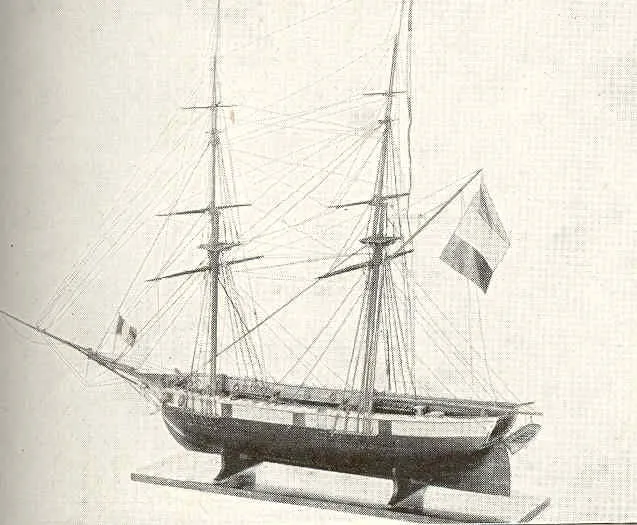
It all began with a signature. On 9 February 1839, aboard the brig La Malouine, Lieutenant Édouard Bouët, assisted by Captain Broquant, concluded a convention with “the chief of the left bank of the estuary, King Kowé-Rapontchombo known as King Denis”, providing for the cession to France of two leagues of land. The original deed is held at the Archives nationales d’outre-mer, in Aix-en-Provence.
The text of the convention
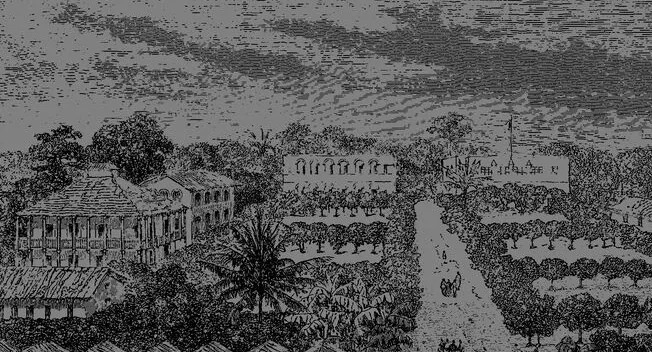
In 1939, for the centenary, the review Le Monde colonial illustré published the full text of the deed under the title « Acte de naissance de l'A.É.F. » (Birth certificate of French Equatorial Africa), in an article by Marthe Savorgnan de Brazza. The convention was signed “in the village and in the house of King Denis, left bank of the Gabon”, in the presence of two princes:
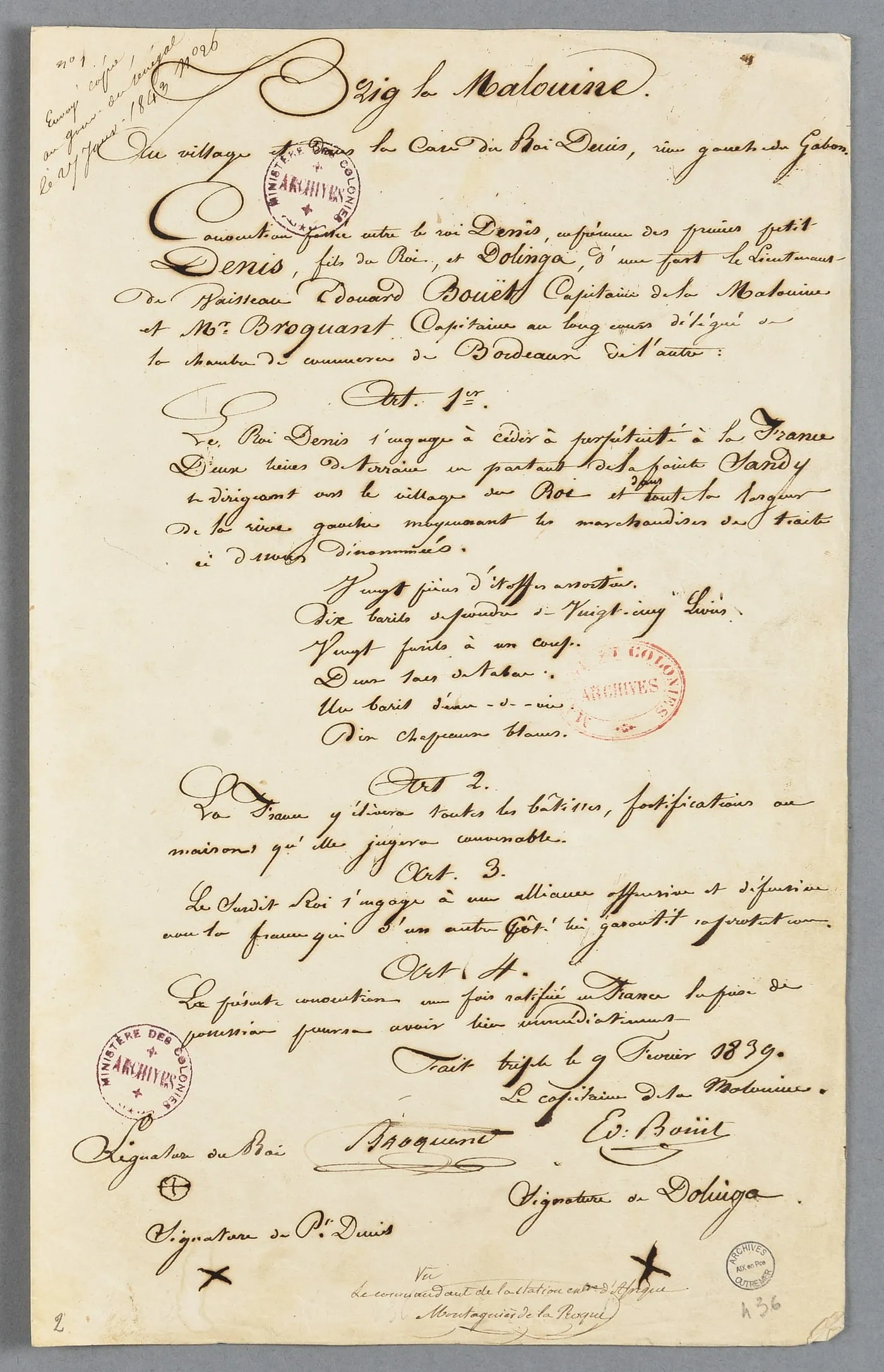
“CONVENTION concluded between King Denis, in the presence of the princes Petit Denis, the king’s son, and Dolingah, of the one part; Lieutenant Édouard Bouët, captain of La Malouine, and Mr Broquant, merchant captain, delegate of the Bordeaux Chamber of Commerce, of the other:
ARTICLE ONE. King Denis undertakes to cede in perpetuity to France two leagues of land running from Sandy Point towards the king’s village and across the whole width of the left bank, in return for the trade goods named below: twenty assorted pieces of cloth, ten 25-pound barrels of powder, twenty single-shot guns, two sacks of tobacco, one barrel of brandy, ten white hats.
ARTICLE II. France shall build there whatever buildings, fortifications or houses it sees fit.
ARTICLE III. The said king enters into an offensive and defensive alliance with France, which, for its part, guarantees him its protection.
ARTICLE IV. Once the present convention has been ratified in France, possession may be taken immediately.
Done in triplicate, 9 February 1839.” Signed: Ed. Bouët, Broquant; the king’s mark (⊕), those of Petit Denis and Dolingah (×); seen: Montagniès de la Roque, commander of the station.
Article III says what matters most: this is not a submission but an offensive and defensive alliance between two parties, in which France guarantees the king its protection. The original is held at the Archives nationales d’outre-mer.
Two details of the deed matter to the House. “Made in triplicate”: the convention was drawn up in three copies. And the king’s cross is answered by that of Petit Denis, “son of the king” according to the deed, who signs beside him.
The deed does not name its drafter. According to the tradition of the House, the convention was drafted by King Denis II, Louis Denis Marie Félix Adandé Rapontchombo, the king’s son, and signed by King Denis I, Antchouwé Kowé Rapontchombo: his is the circled cross marked “Signature du Roi”.
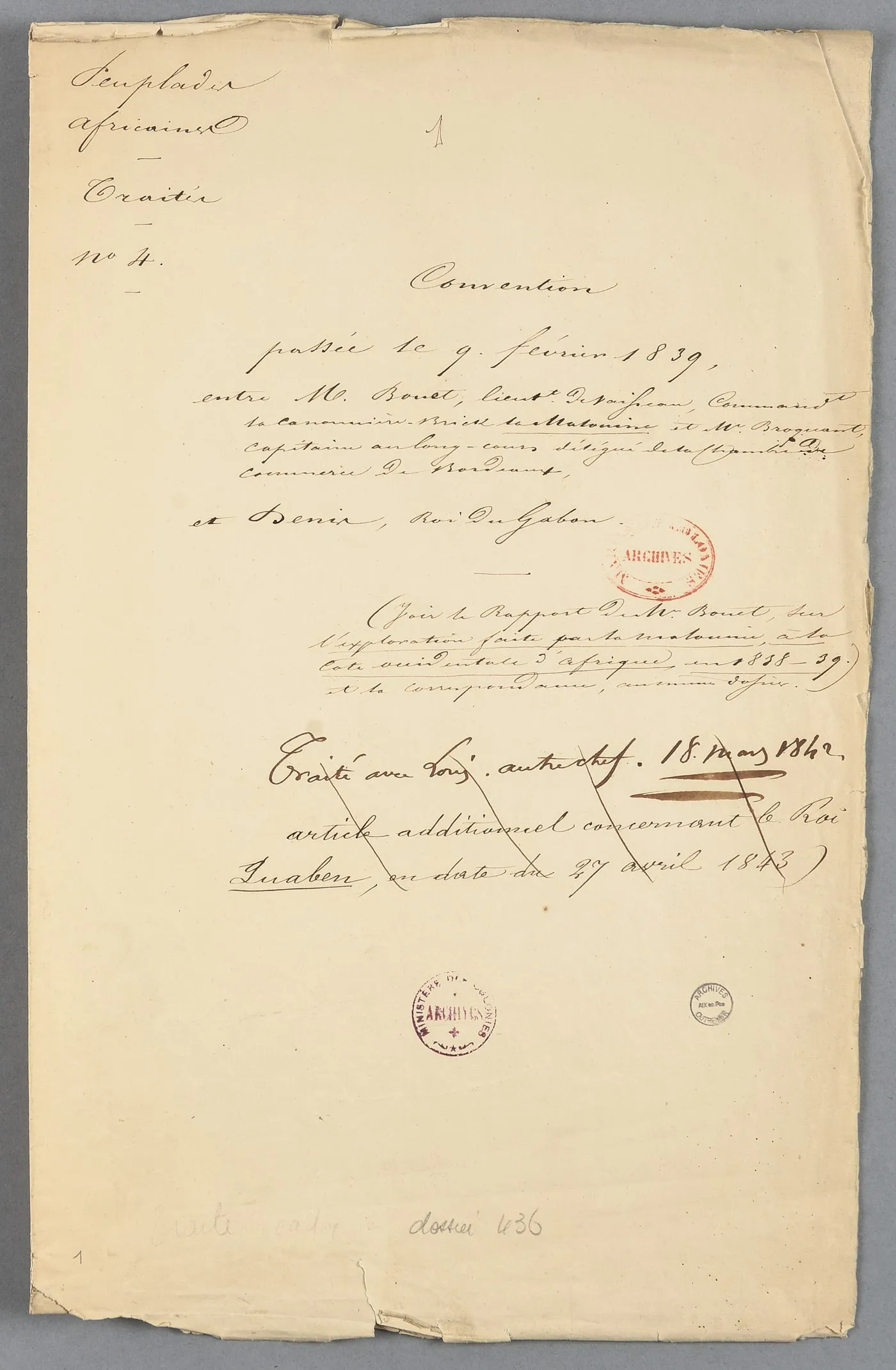
The file at the Archives nationales d’outre-mer (reference FR ANOM 40 COL 436) holds one of these copies: the handwritten original, drawn up aboard La Malouine, bearing the king’s circled cross, the crosses of Petit Denis and Dolingua, the signatures of Broquant and Bouët, and the endorsement of Commander Montagniès de la Roque. A fair copy accompanies it.
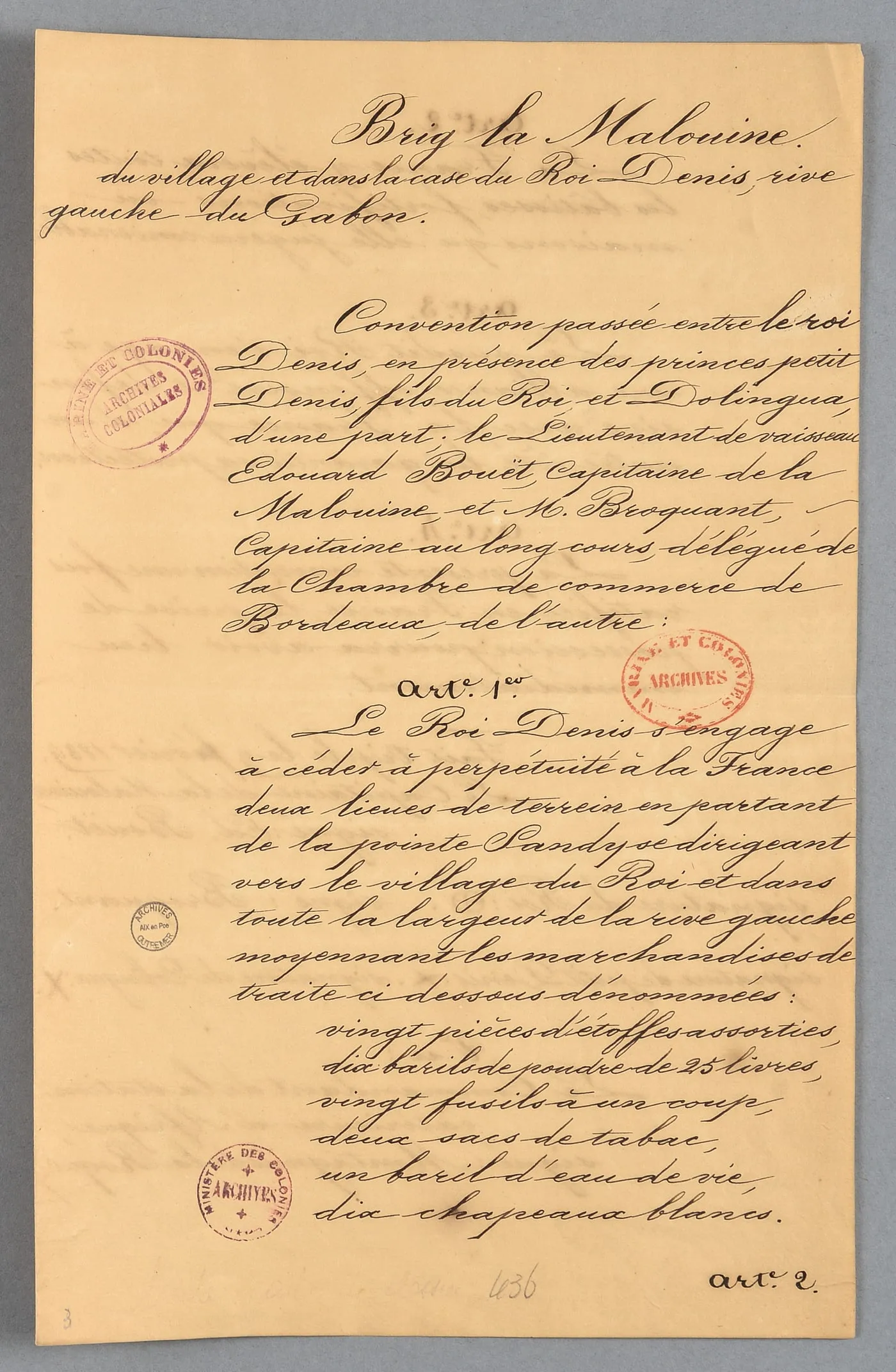
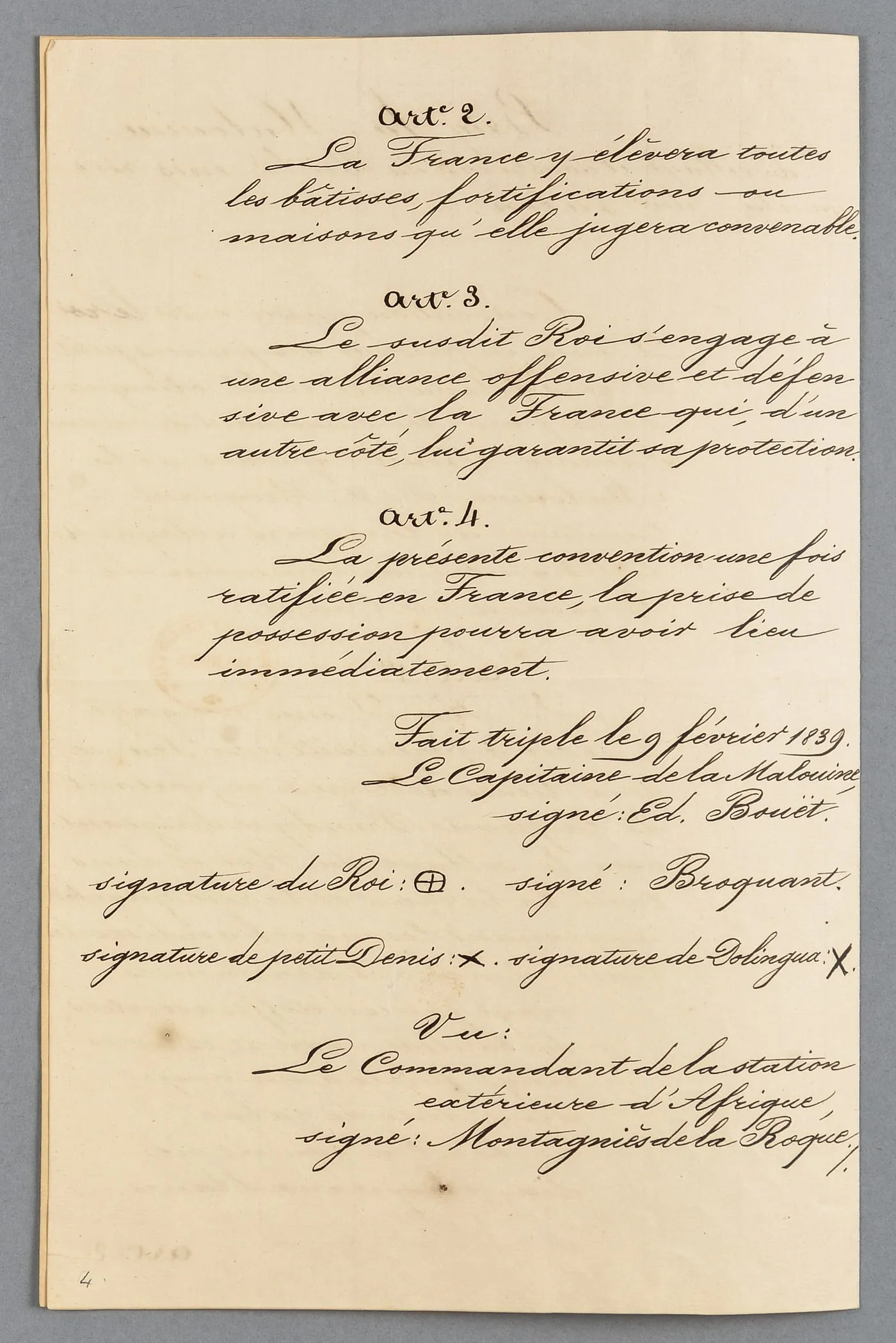
Click a page or use the arrows to turn it
- The file cover: “Peuplades africaines · Traités · no. 4”, with Bouët’s report on the campaign of La Malouine (1838-1839) and the treaty of 18 March 1842 · ANOM, 40 COL 436.
- The signed original: “Signature du Roi ⊕”, “Signature du P[eti]t Denis ×”, signatures of Broquant and Ed. Bouët · Archives nationales d’outre-mer, FR ANOM 40 COL 436.
- The fair copy, first page: the preamble and the first article · ANOM, 40 COL 436.
- The copy, second page: “Fait triple le 9 février 1839” (made in triplicate), signature of the king ⊕, of petit Denis × and of Dolingua × · ANOM, 40 COL 436.
See the file at the Archives nationales d’outre-mer, FR ANOM 40 COL 436 ↗
Page|ofThis treaty made King Denis, as the press would later write, “the first to sign, in 1839, a treaty with France”. But a second, less well-known episode ties the family’s name directly to the birth of the future capital.
The captured ship and the village of the freed
In the 1840s, the French navy was hunting down slave ships along the coast. A Catholic newspaper was still telling the story in the early 20th century:
“The frigate l’Arèthuse, having given chase to and captured a slaver […], landed the poor Black captives and set them free, after negotiating on their behalf the cession by King Rapondtchombo of a certain expanse of land on which they could build a village.”
This is the origin of the “village of the freed” (« village des affranchis »): captives torn from the slave trade, settled as free people on land granted by the king. In 1849, when the captives from the slave ship Elizia were settled on the north bank, the settlement received the name that says it all: Libreville, the free town. Family memory and Gabonese historiography hold that this foundation was made possible by the cessions granted by the chiefs of the estuary, foremost among them King Denis.
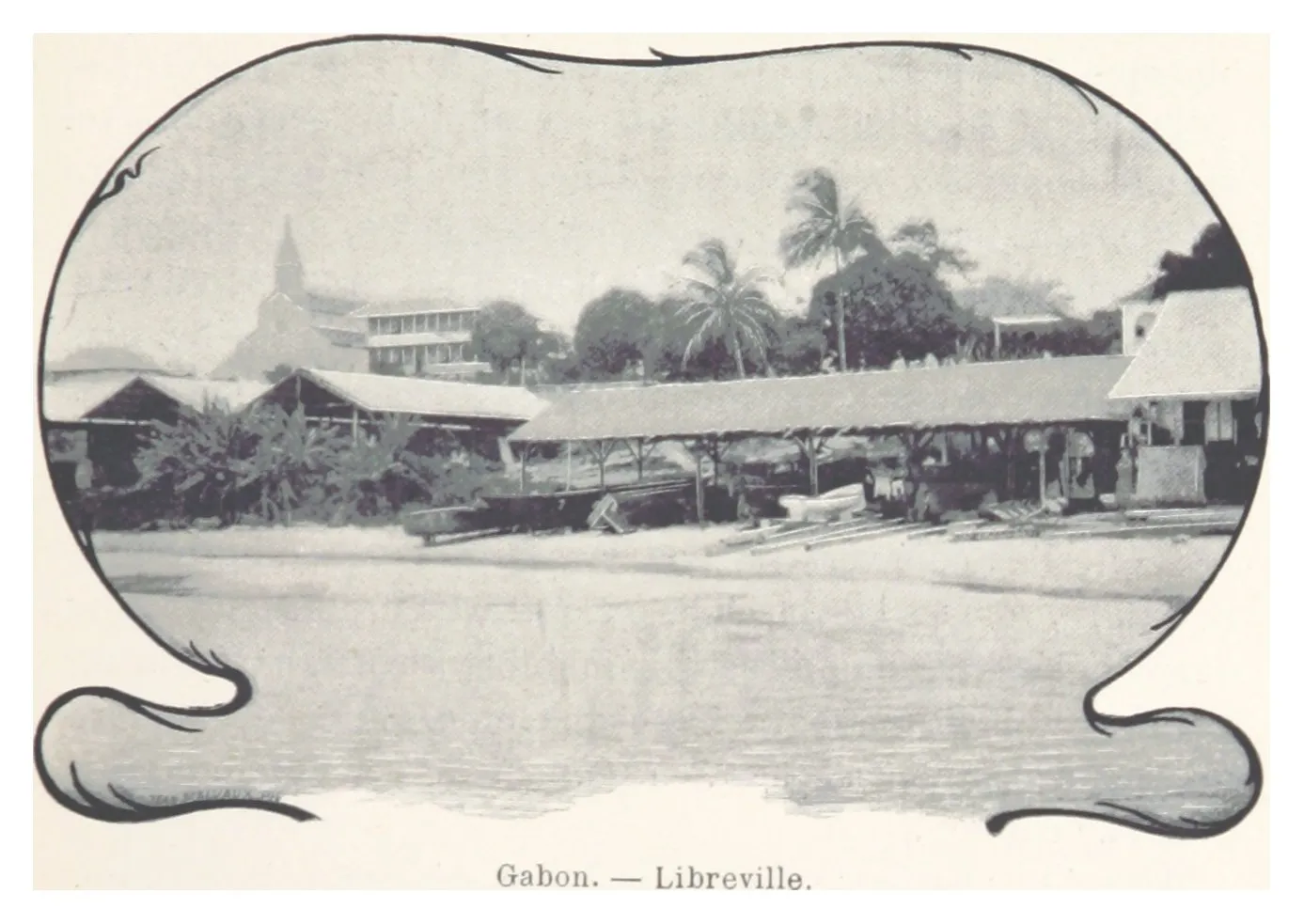
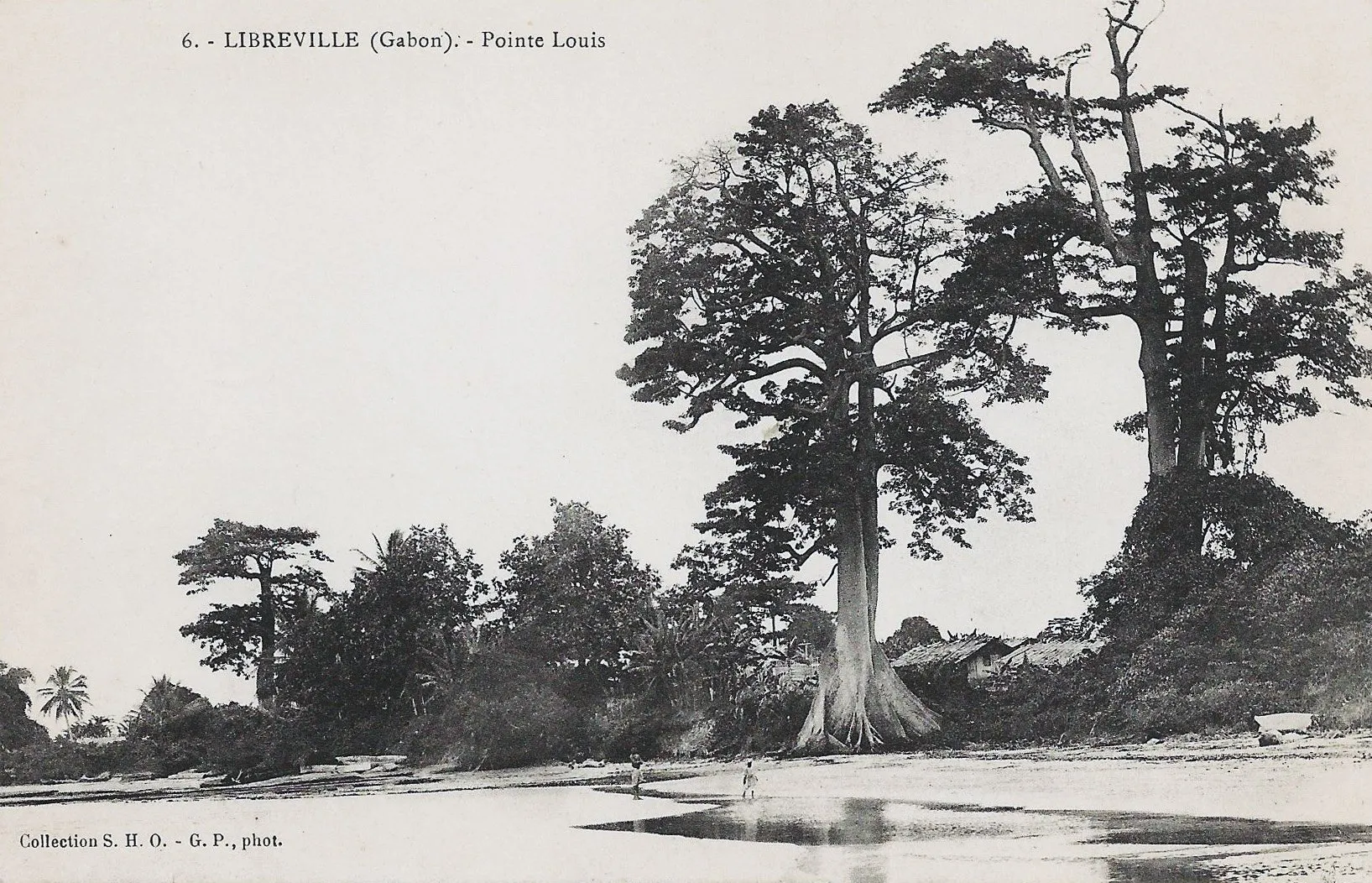
A century later, the press remembers
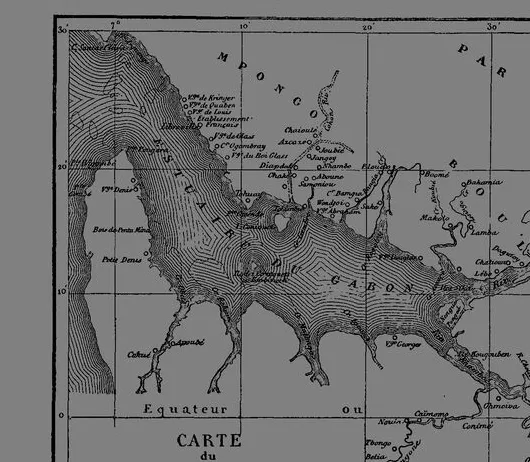
Even in 1939, introducing his descendant on a visit to Paris, a daily paper summed up the founder’s role thus: “descendant of the native King Denis, who, by the treaty concluded with Lieutenant Bouët-Willaumez in 1839, allowed France to establish itself in the country” (Le Républicain du Gard). And the king left his name on the very geography of the estuary: the cape, the point and the island of Denis, facing Libreville, where his descendants rest today.
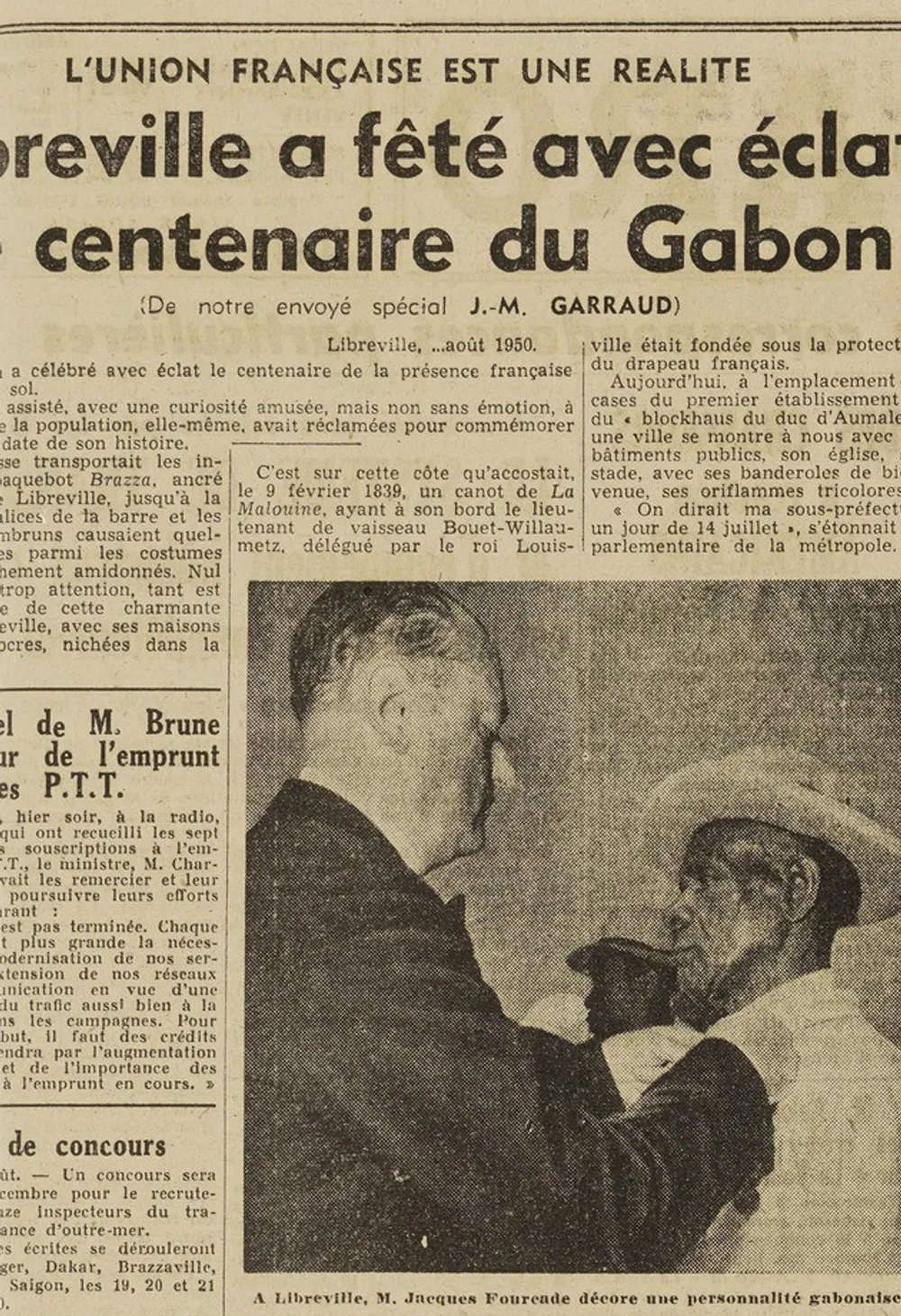
Even in 1950, for the centenary of the French presence, Le Figaro wrote that Bouët-Willaumez came “to sign a treaty of friendship with the local chief, King Denis. Ten years later, Libreville was founded under the protection of the French flag” (see 1950, the centenary: King Denis in Le Figaro).
Sources
- Le Monde colonial illustré, 1939, p. 128: Marthe Savorgnan de Brazza, « Acte de naissance de l'A.É.F. », full text of the convention of 9 February 1839 (Gallica/BnF).
- Convention of 9 February 1839 between King Denis and Lieutenant Bouët: Archives nationales d'outre-mer, reference FR ANOM 40 COL 436 (digitised document).
- La Croix de Flers and La Libre Parole: account of the Arèthuse and the village of the freed (Gallica/BnF, public domain).
- Notre librairie: the 1839 convention signed aboard La Malouine with « le roi Kowé-Rapontchombo dit Roi Denis » (Gallica/BnF).
- Le Républicain du Gard, 1939 (Gallica/BnF).
- On the reign as a whole: André Raponda-Walker, Notes d'histoire du Gabon, 1960, ch. II; and the Family tree page.