

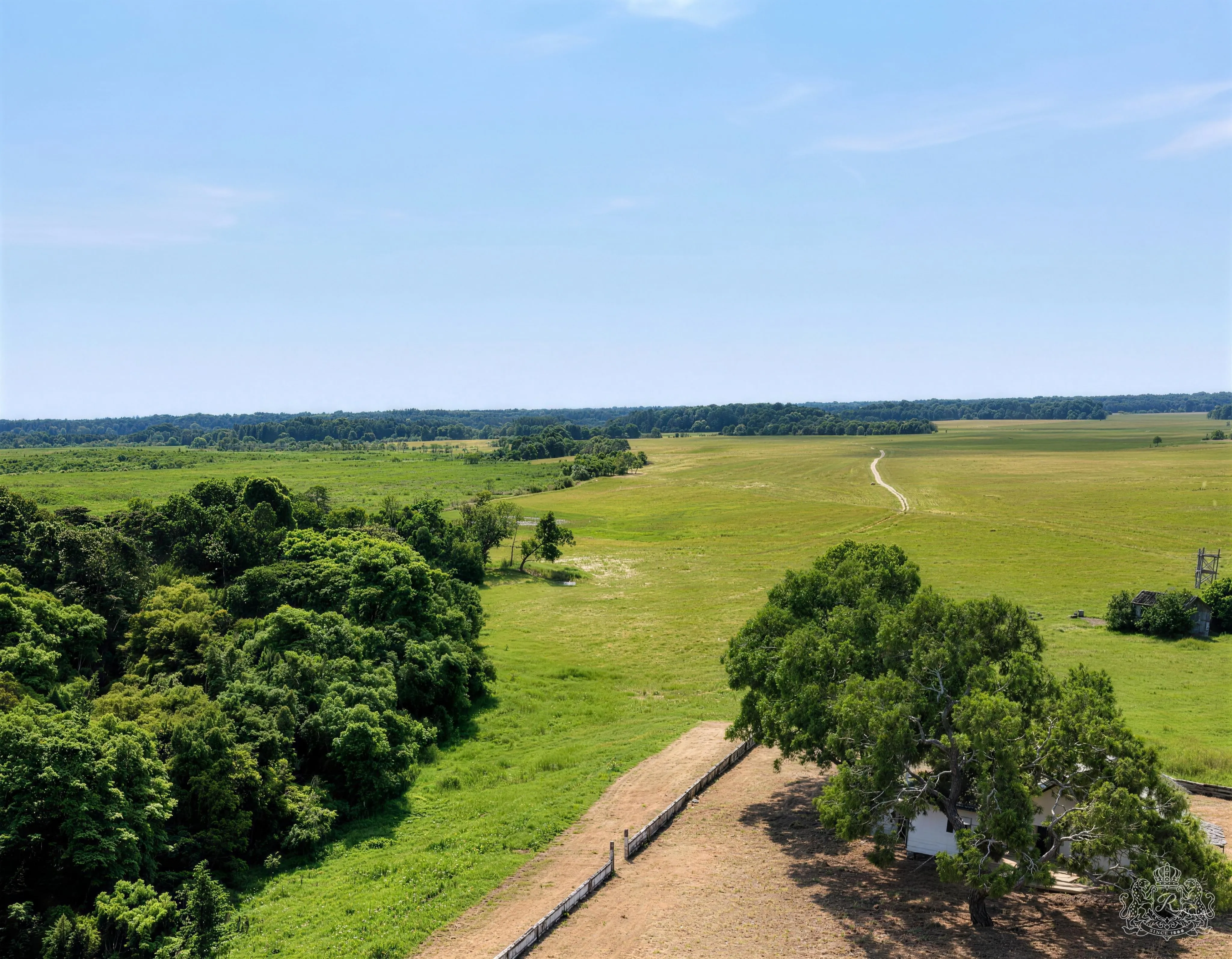
Pointe-Denis · Gabon
The Domain
A peninsula between the estuary and the ocean, fringed with mangrove and forest. Beneath the trees, the temple and the burial ground where the Assiga clan keeps the Bwiti.
Finding the Domain
Pointe-Denis, at the mouth of the estuary
Pointe-Denis closes the mouth of the Gabon estuary to the south, facing Libreville on the far shore. To the west, the Atlantic Ocean; to the south, the forest and beaches of Pongara National Park.
It is reached from Libreville by water: fifteen minutes by pirogue across the estuary.
I · Arriving
Crossing the estuary
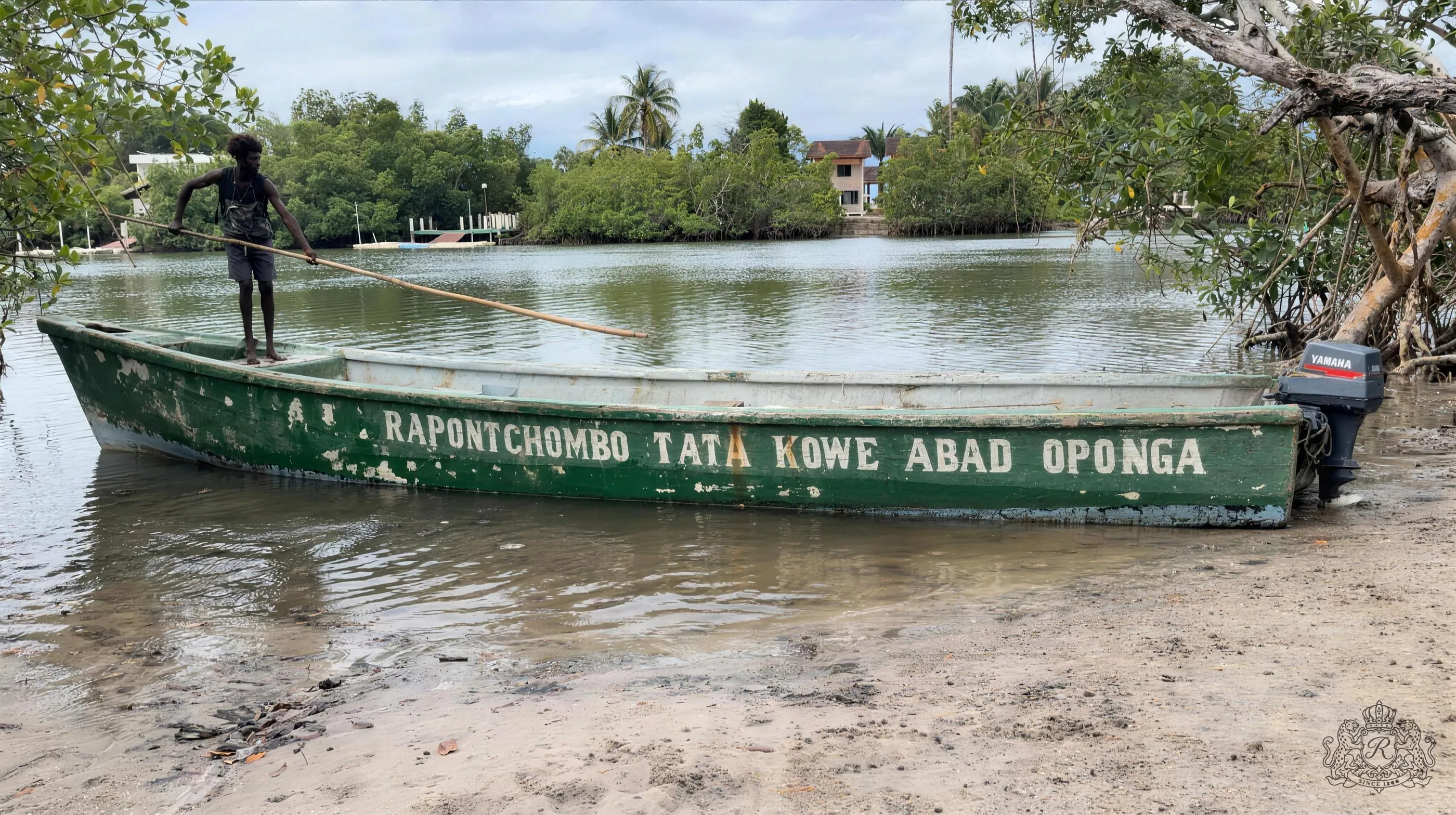
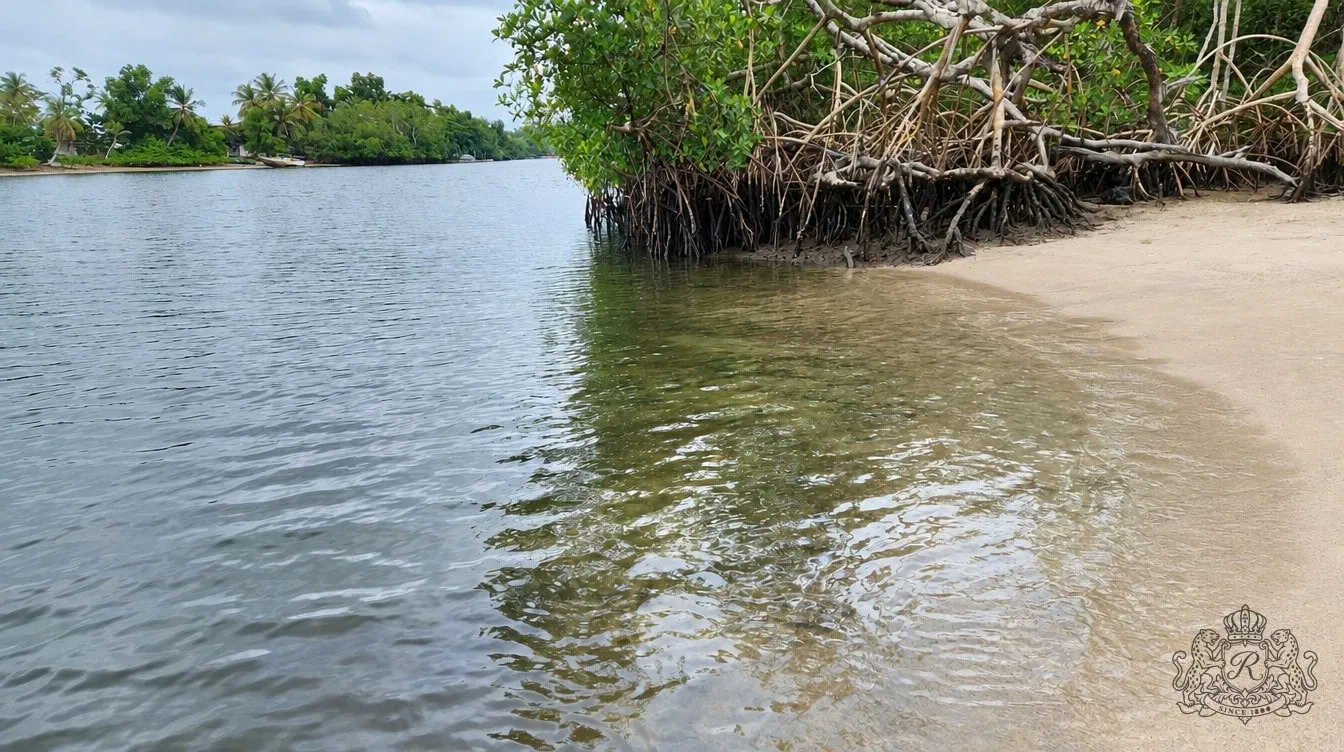
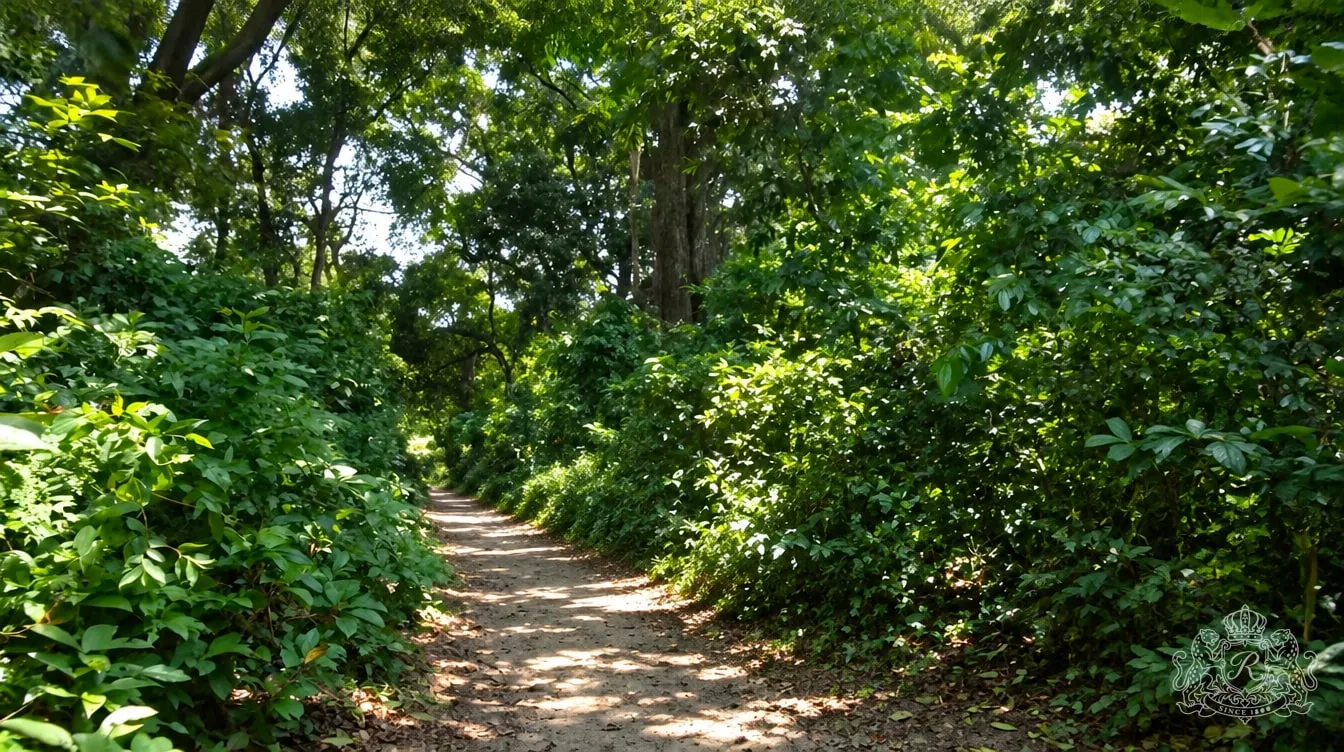
The Domain is reached only by water. From Libreville, fifteen minutes by pirogue across the Gabon estuary lead to Pointe-Denis, a peninsula fringed with mangrove. On the shore, a sandy path climbs into the forest: here the lands of the Assiga clan begin.
II · The temple
The Bwiti temple
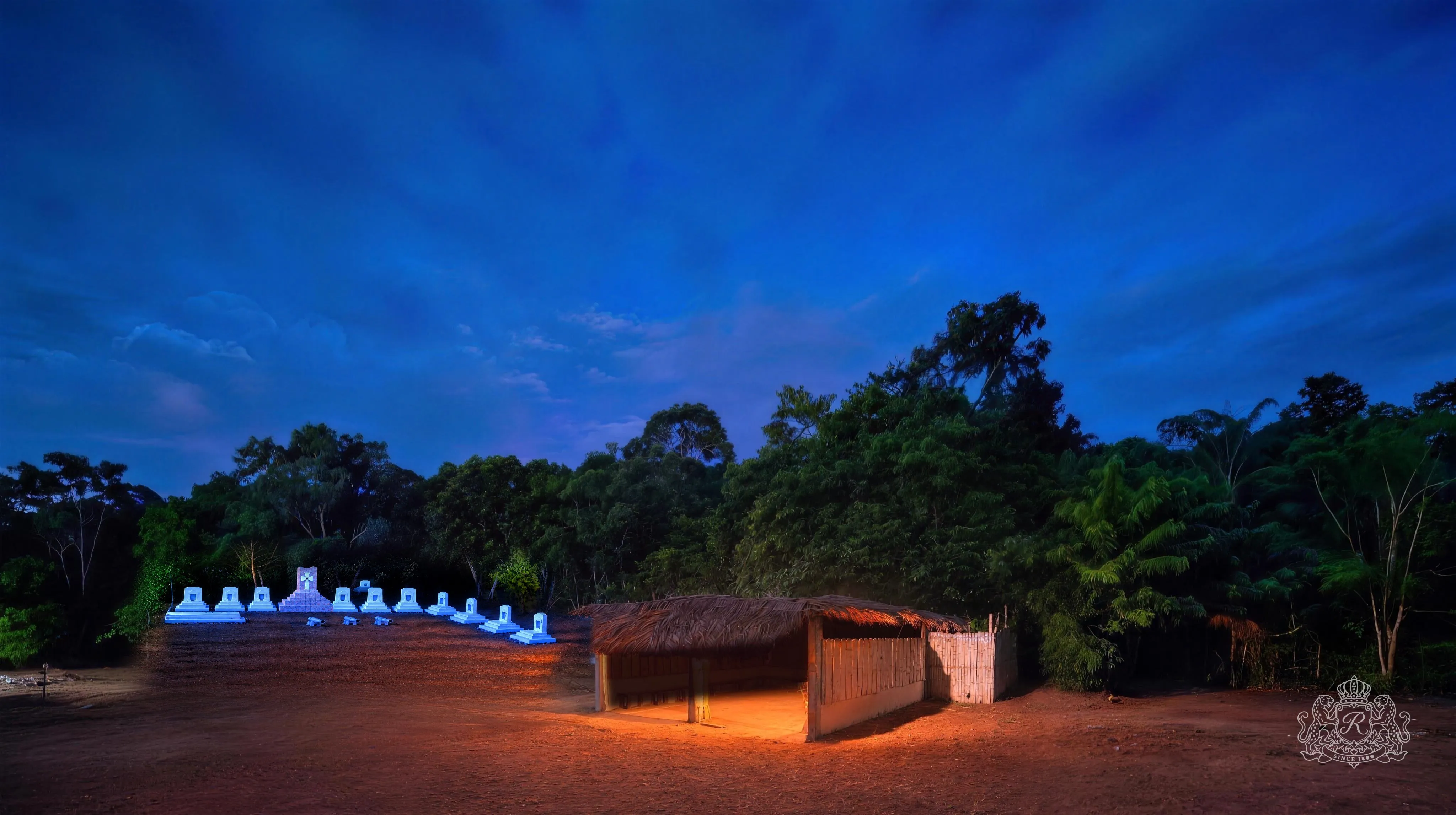
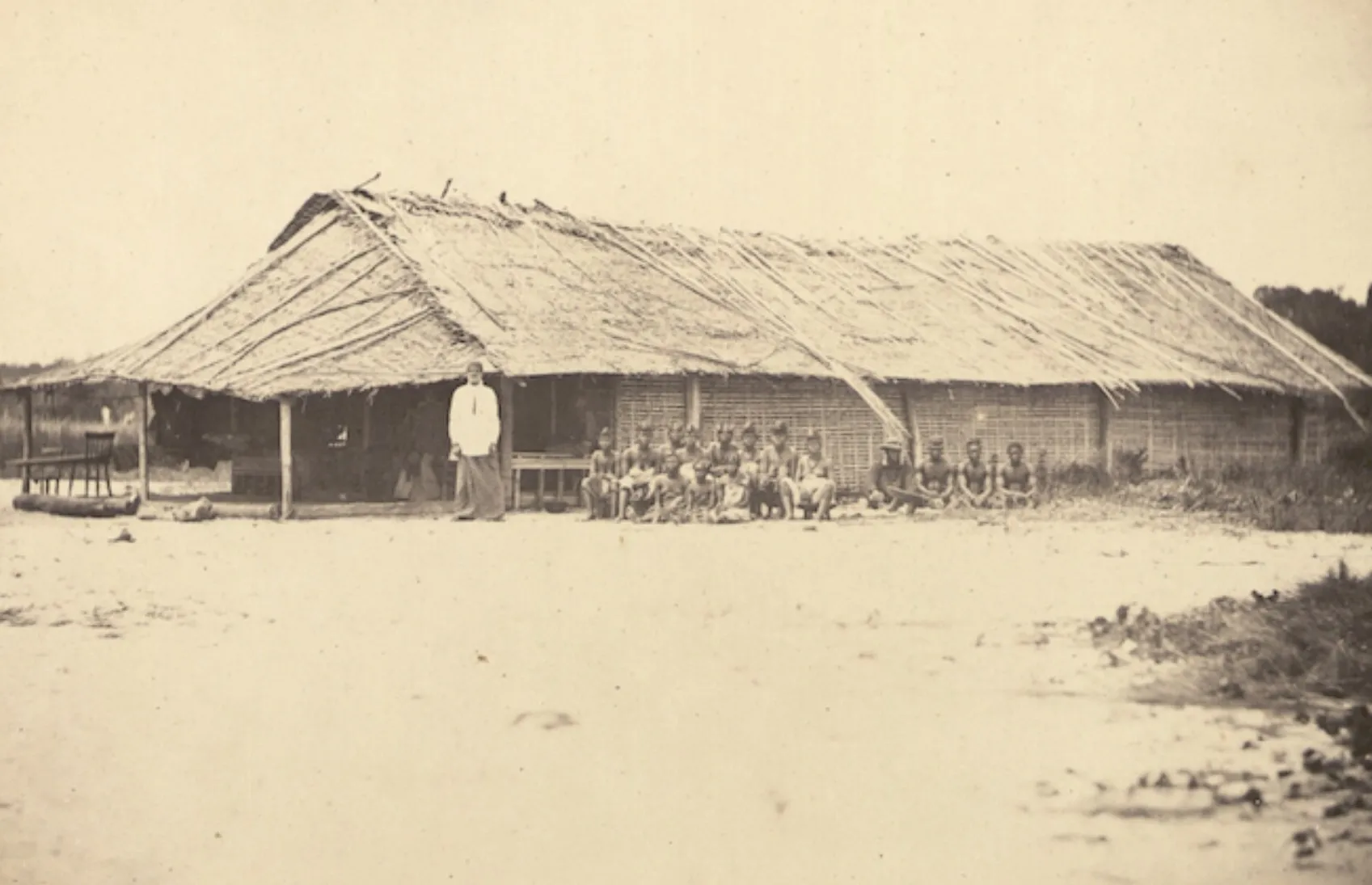
At the heart of the Domain, the temple. Photographed in the early 1860s, it is the oldest building of the House whose image has come down to us. Family tradition holds it to be the Bwiti temple where King Denis kept the rites entrusted to his clan.
Beneath this palm roof, the memory of the House recounts, the chiefs of the whole estuary came seeking counsel. Then came the 19th-century travellers sailing up the coast of Africa: Doctor Griffon du Bellay, the photographer Houzé de l’Aulnoit, who captured the image of the temple, and others whose accounts travelled the world.
“He has a taste for hospitality” (« Il a le goût de l’hospitalité »), Le Tour du Monde wrote in 1865. One came to Pointe-Denis a stranger; one left bound by one’s given word.
To this day, the Bwiti vigils are held here around the fire, to the sound of the ngombi harp, the chants and the mongongo. Traditional chiefs, clan chiefs and harpists come from all over Gabon to take their seat. The House claims nothing: it keeps the temple, and lets its memory speak.
III · The burial ground
Where the ancestors rest
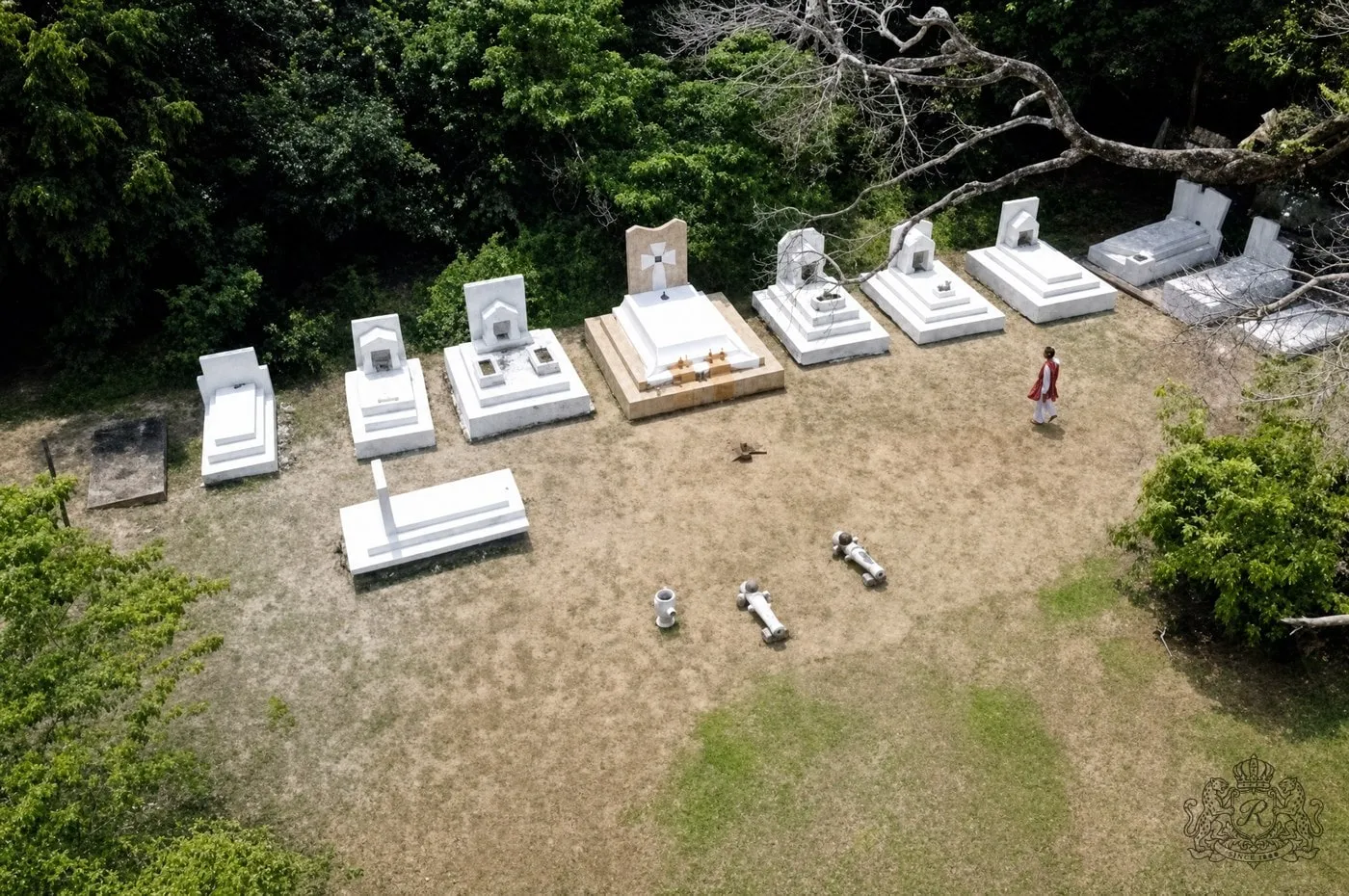
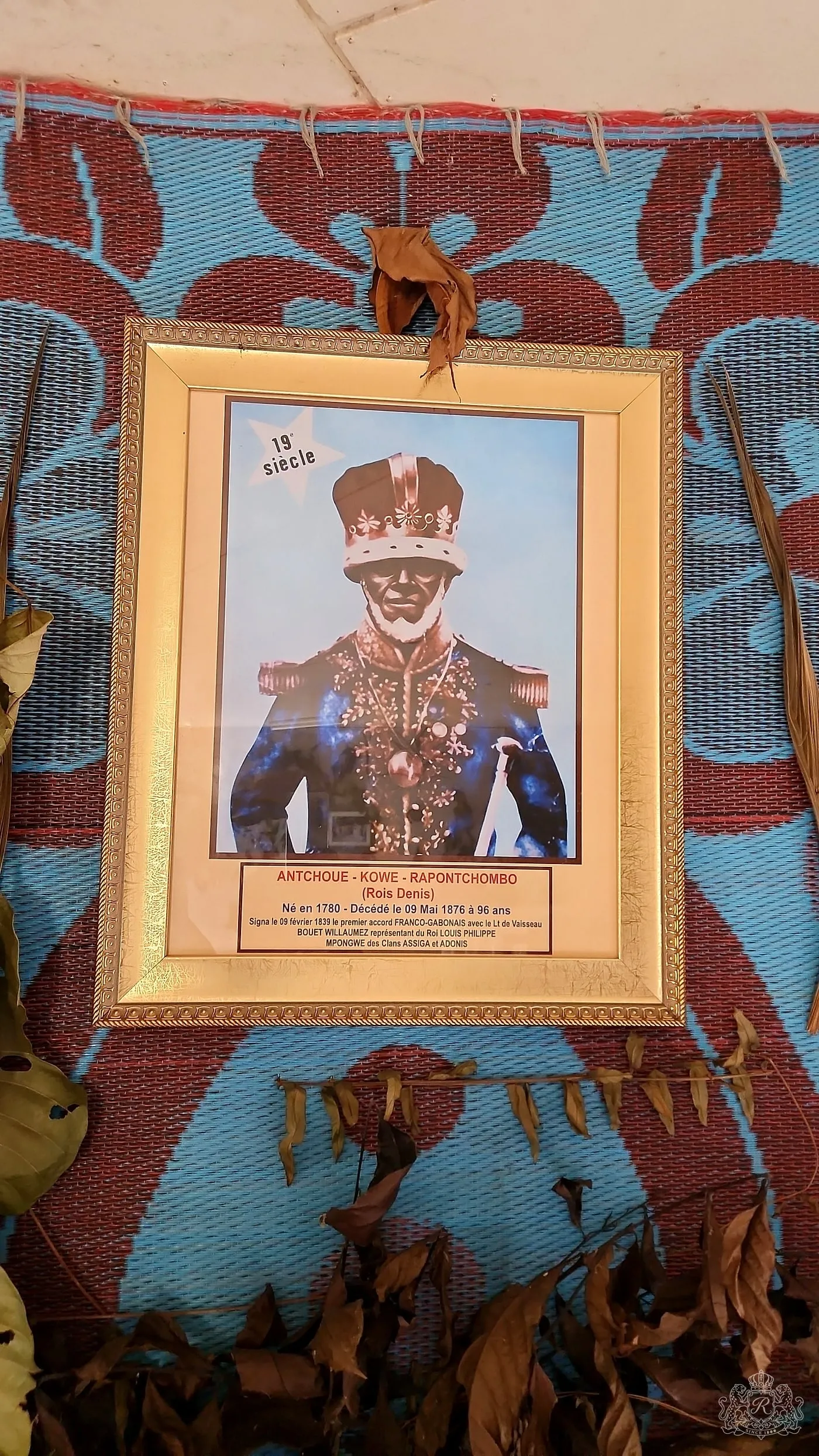
White against the forest, the tombs of the lineage form the most sacred place on the Domain. King Denis I, Antchouwé Kowé Rapontchombo, has rested here since 9 May 1876, surrounded by his kin. The ceremonial is held here every year and, during the initiation, offerings are brought in thanks to the family’s departed.
IV · The museum
The memory of the clan
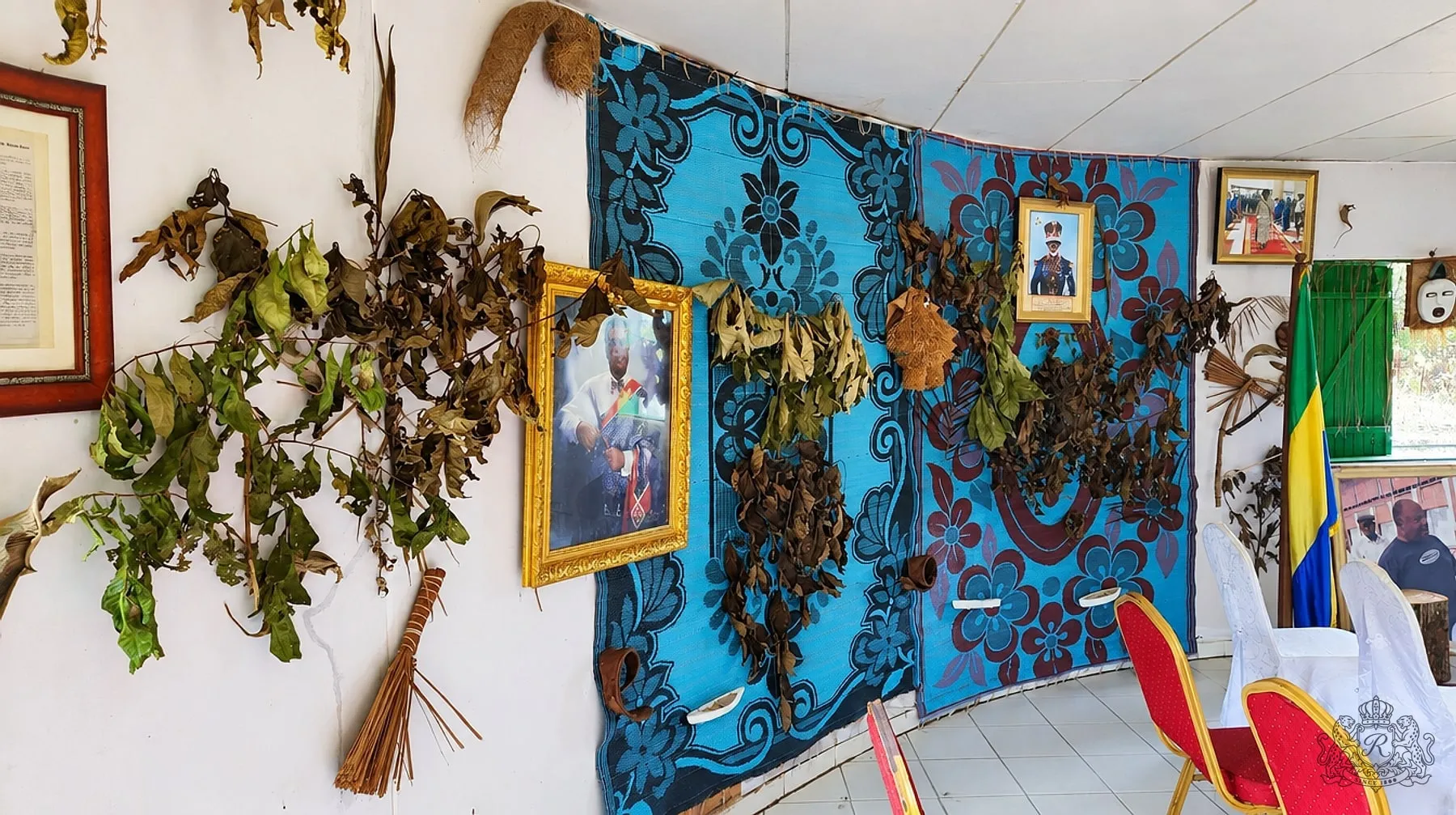
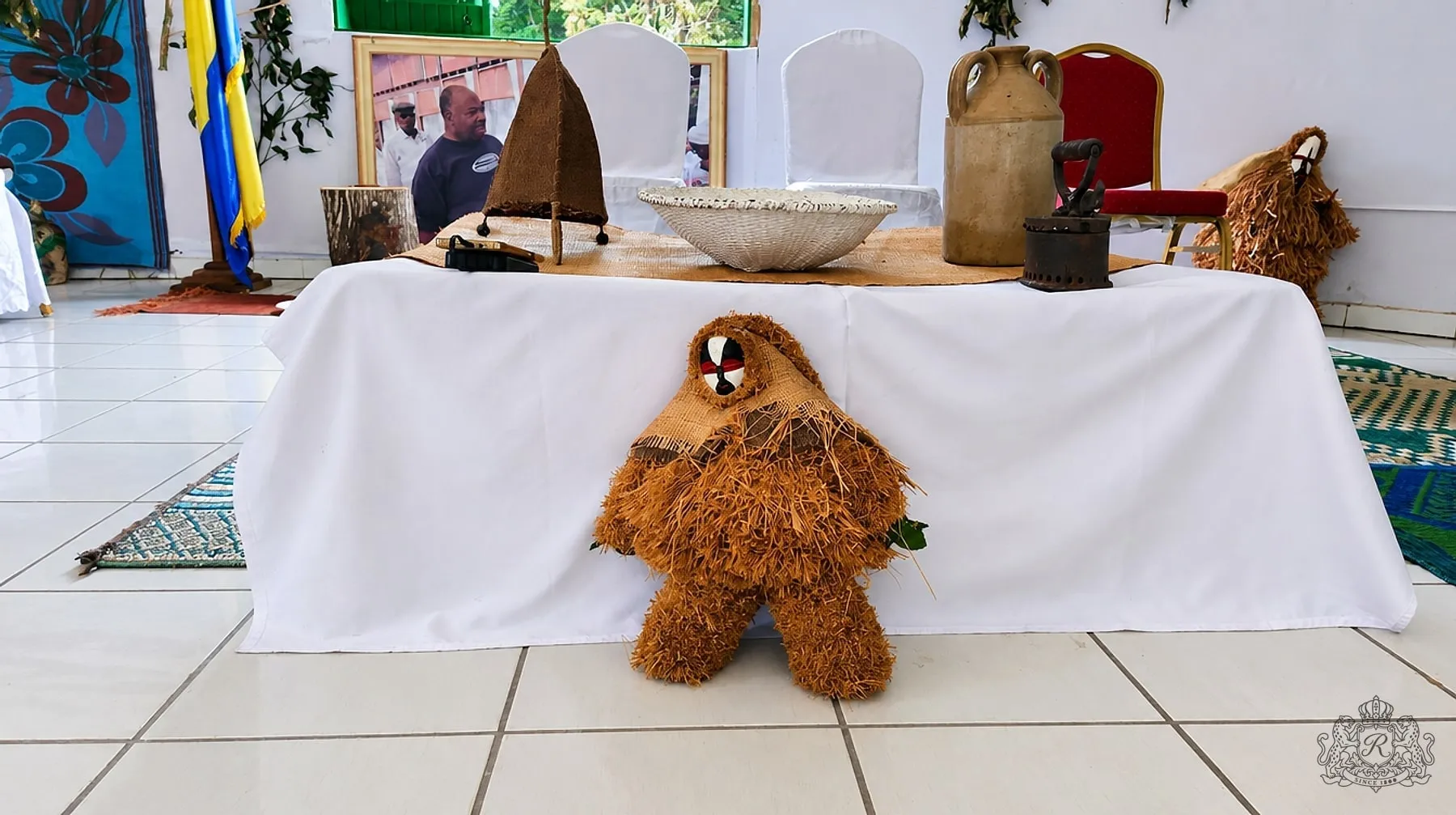
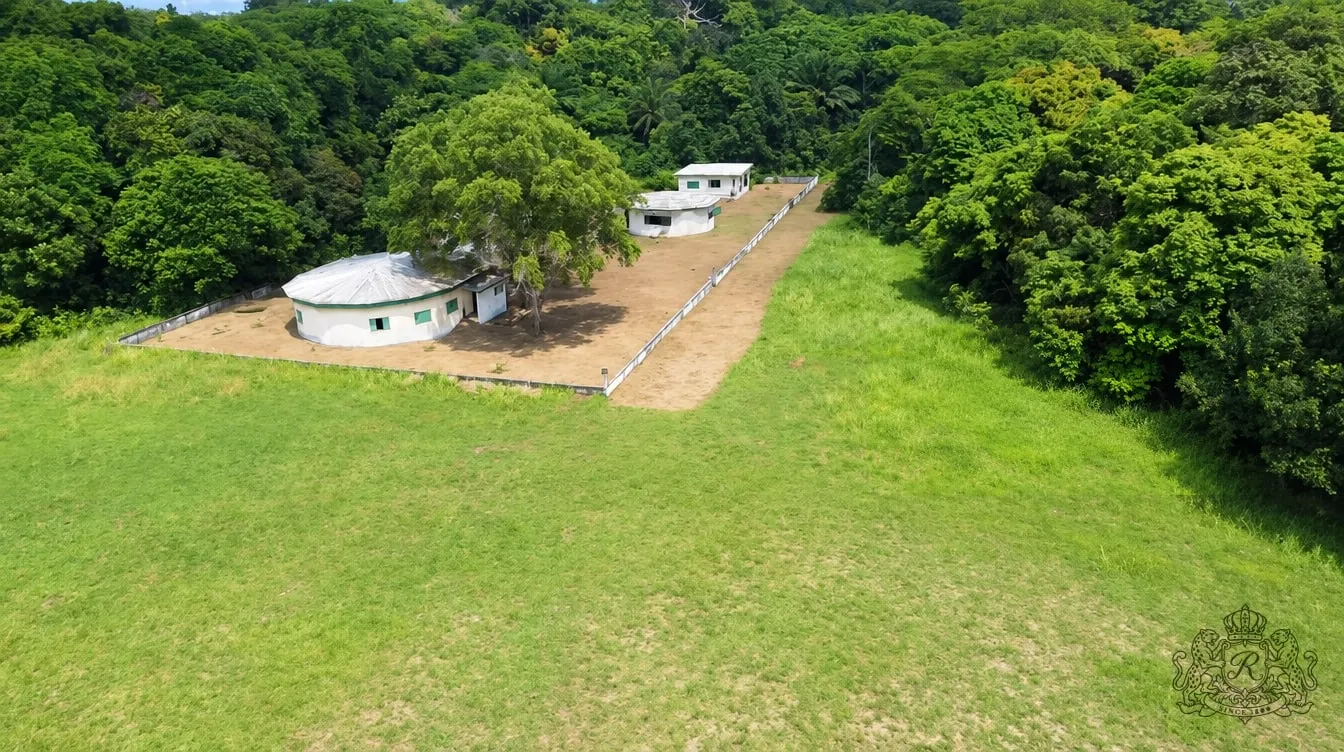
In the white buildings of the museum, the family keeps its memory: portraits of the lineage, from King Denis to his descendants, mats hung on the walls, raffia costumes with painted masks, old objects, and photographs that link the House to the history of modern Gabon.
Among them, Denis Adande Rapontchombo, President of the Supreme Court, beside President Omar Bongo, himself an initiate of the Bwiti.
V · The rooms
Sleeping at the forest’s edge
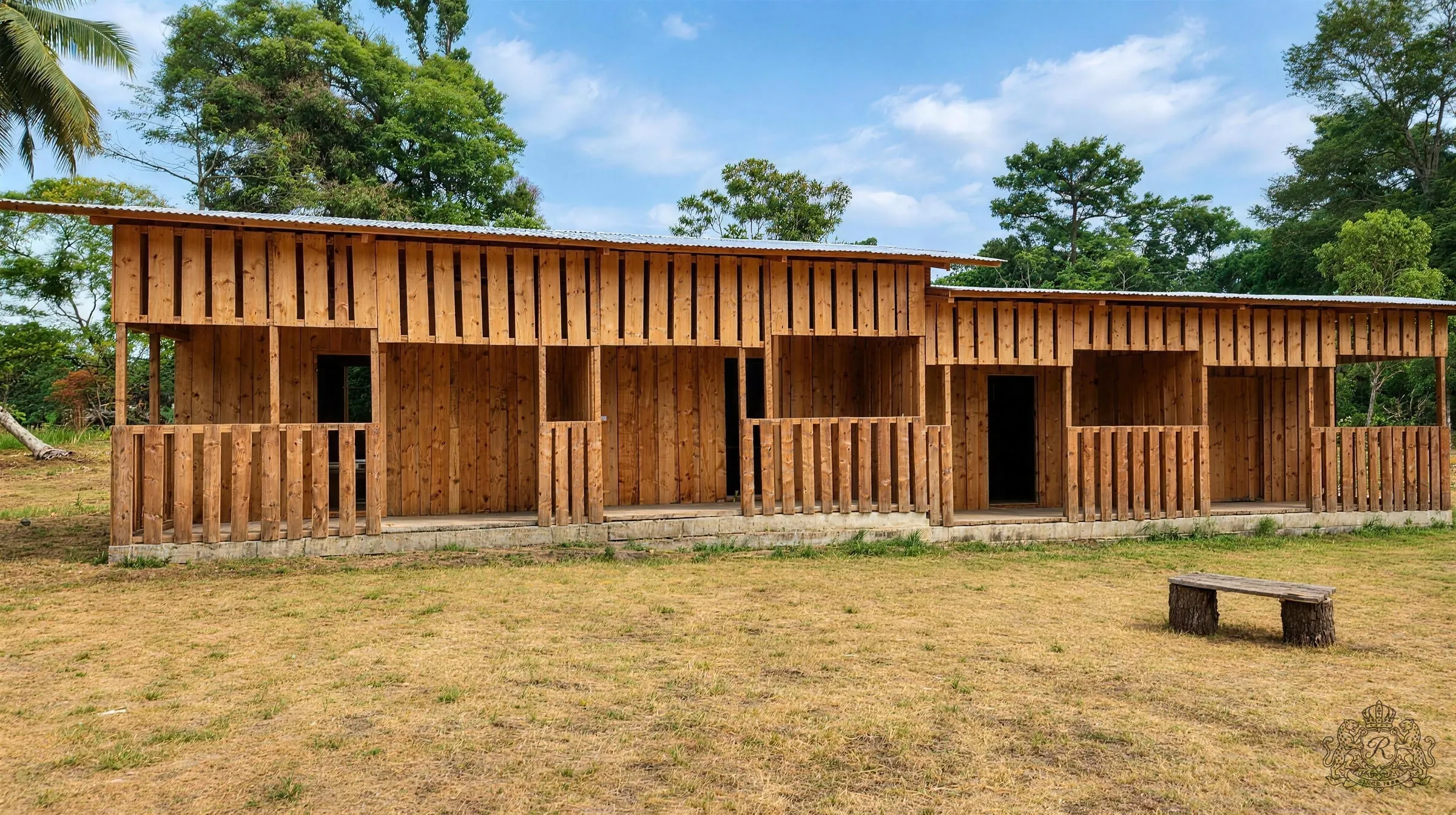
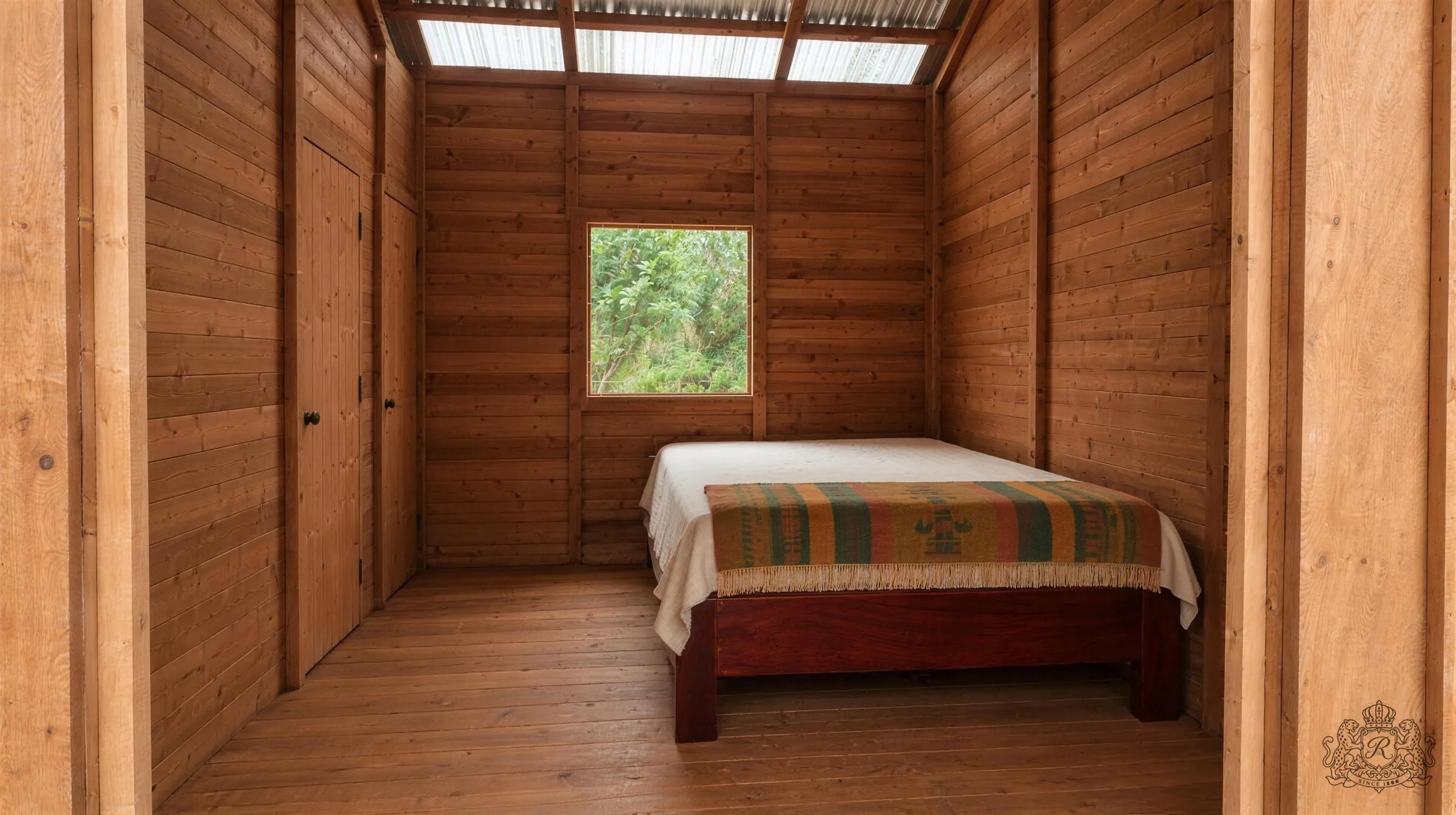
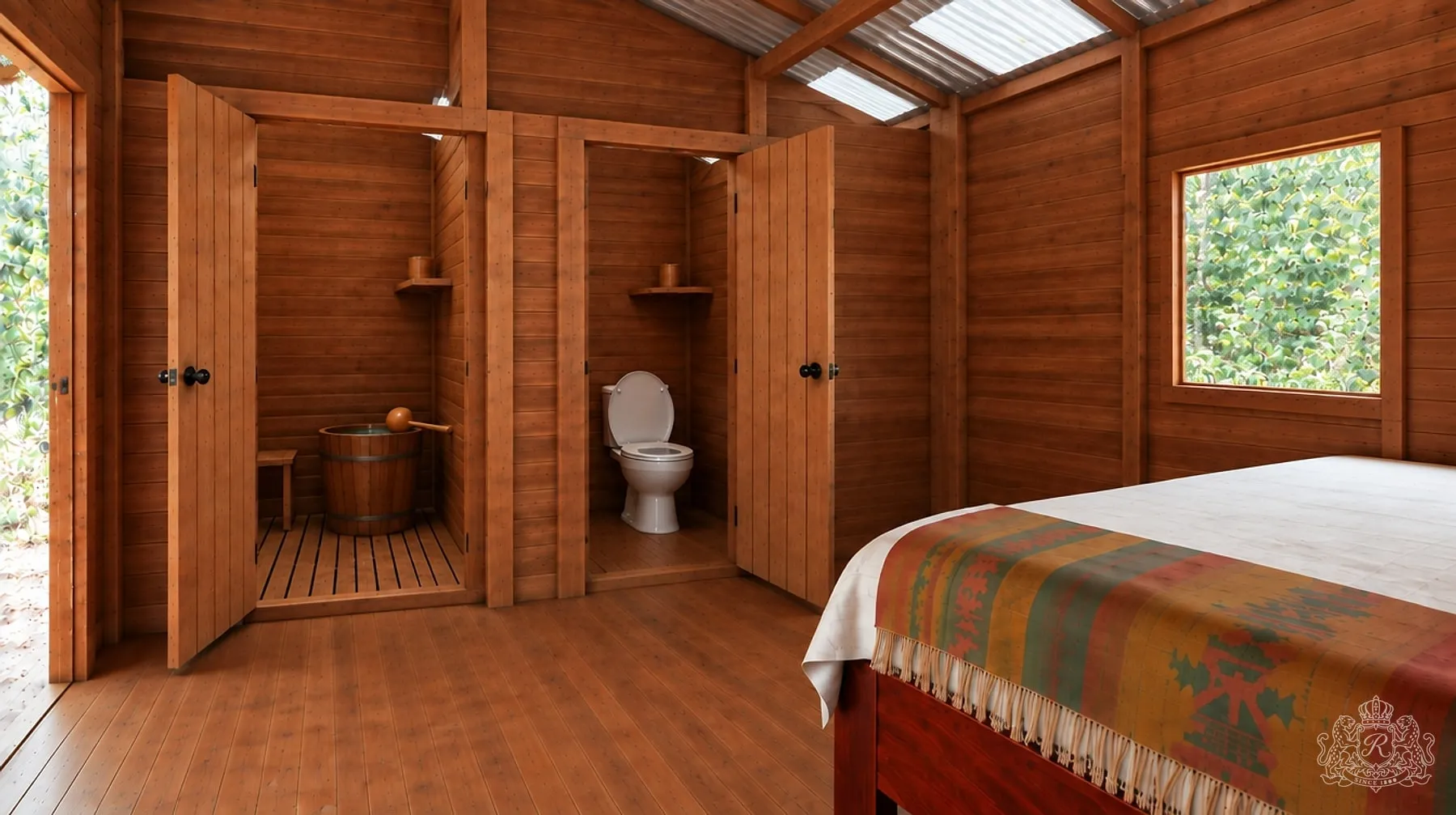
At the edge of the clearing, the wooden pavilion of rooms opens its long veranda onto the forest. Every room follows the same plan: a large wooden bed at the back, a square window onto the trees and, behind two plank doors, a traditional bucket shower and a small WC.
The roof is high, open to the rafters: the room breathes, and at night you hear the forest.
VI · Pongara
Pongara, at the doorstep
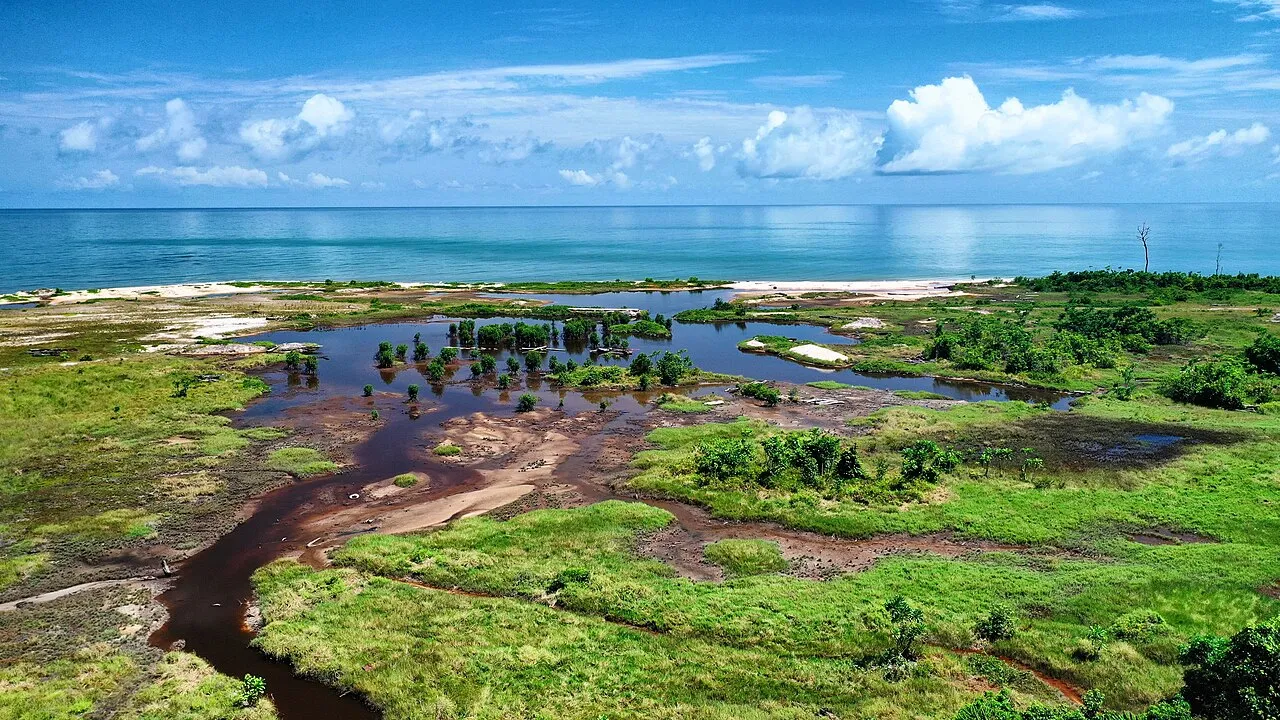
The Domain opens at the gates of Pongara National Park: 870 km² of mangroves, savannahs and beaches facing Libreville. Forest elephants pass at the threshold of the huts, leatherback turtles nest on the sand, humpback whales cruise offshore.
During the initiation, a day in the forest and a pirogue outing into the mangrove lead you to it.

Received on the Domain
Eight guests at most per session: Maison Assiga opens its vigils to those who feel called.