

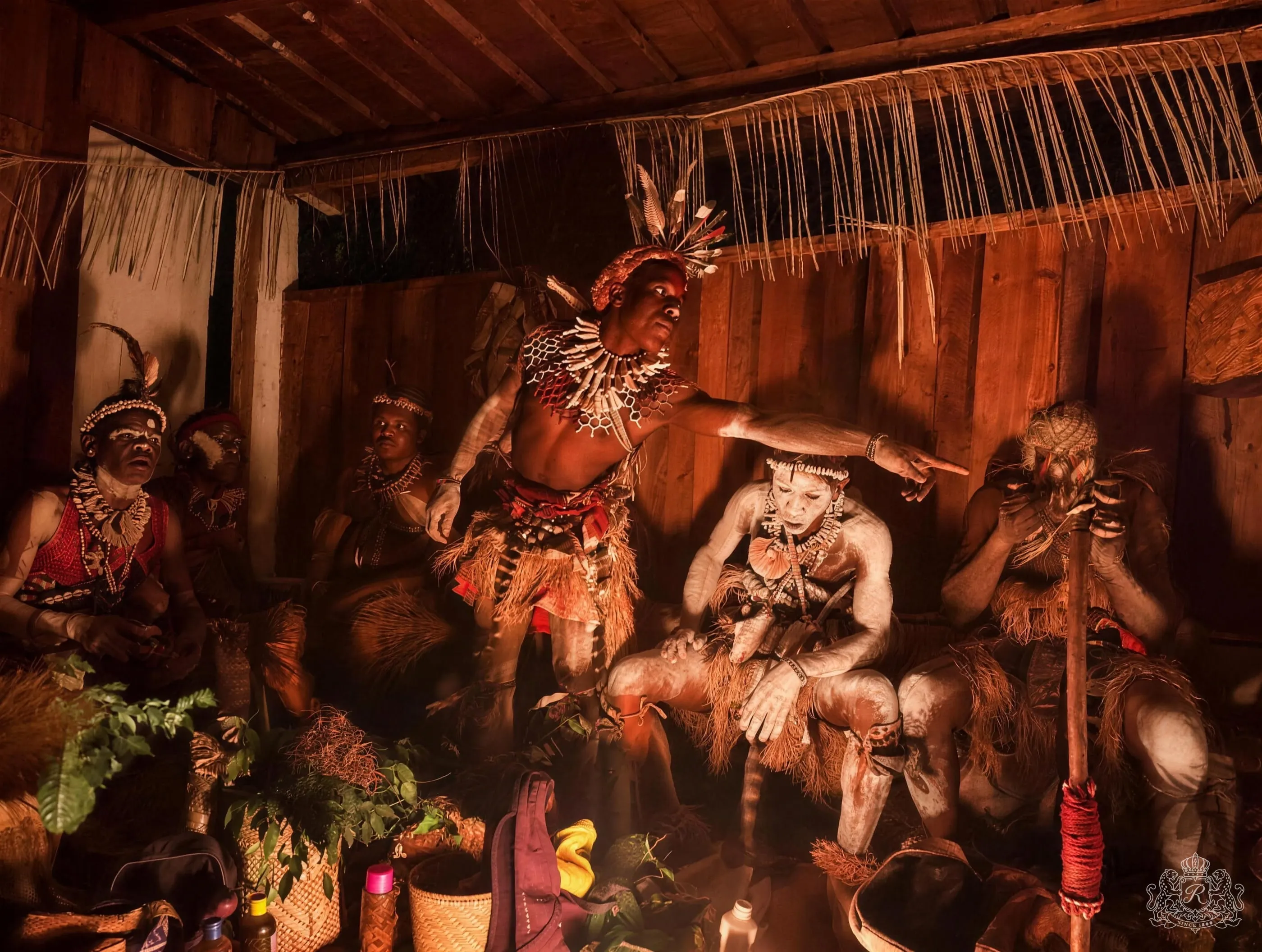
The Bwiti is the great initiatory way of Gabon: a body of rites, knowledge and songs handed down from elder to younger, entered through initiation. But “the Bwiti” does not exist in the singular: there are several Bwiti, branches born at different times among different peoples, which answer one another like the limbs of a single tree. This guide presents them one by one, with their dates, drawing on the work of the ethnographers who documented them: André Raponda-Walker and Roger Sillans, Otto Gollnhofer and Julien Bonhomme.
Two centuries of the Bwiti in seven dates
Ancient times
In the forest of central Gabon, the Babongo, whom tradition holds to be the first keepers of the Bwiti, pass on their knowledge and their rites to neighbouring peoples.
18th and 19th centuries
Among the Mitsogo and the Apindji of the Ngounié, the original Bwiti, the Disumba, gives structure to the society of initiates: the oldest body of rites attested by ethnographers.
19th century
Along the trade routes, knowledge of the rites travels towards the coast. At Pointe-Denis, the tradition of Maison Assiga holds the building photographed as early as 1861 to be the temple of King Denis.
Around 1890-1910
Through contact with work camps, missions and migrations, the Bwiti reaches the Estuary and the north of the country: the ways that grew from the Disumba trunk spread far beyond their cradle.
1920-1950
Opposed for a time by the missions and the colonial administration, the Bwiti endures and grows, from central Gabon to the outskirts of Libreville.
1958-1962
In 1962, André Raponda-Walker and Roger Sillans publish Rites et croyances des peuples du Gabon, the standard work on the rites and initiations of the country.
Today
The Disumba and the Omengo of Maison Assiga that springs from it, the Missoko and the Ngondet: the ways of the Bwiti remain alive, from central Gabon to Pointe-Denis.
The trunk: the Disumba of the Mitsogo and the Apindji
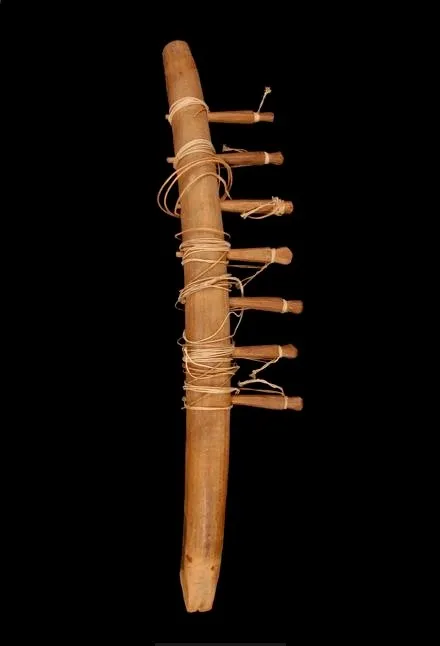
The oldest attested body of rites is the Bwiti Disumba, among the Mitsogo and the Apindji of the Ngounié region, in central Gabon. It is a society of initiates: a man enters it through initiation, receives there the founding vision, then advances from grade to grade in the knowledge of origins. Otto Gollnhofer and Roger Sillans, who devoted their careers to the Mitsogo, described its ritual architecture: the temple (the ebandza), the central post, the fire, the harp. All the other branches of the Bwiti are linked, closely or distantly, to this trunk.
Missoko, the way of the healers
From the same Mitsogo world comes the Bwiti Missoko (or Misoko), the way of the ngangas: healers, seers and masters of diagnosis. Where the Disumba is first and foremost a society of knowledge of origins, the Missoko is turned towards care: people often enter it to be healed, to understand the origin of a misfortune or to receive in turn the charge of healing. The anthropologist Julien Bonhomme described its initiatory journey in Le miroir et le crâne (2006), the standard study of this branch. It is to this branch that the initiation handed down by Maison Assiga belongs, the House that hosts the initiation at Pointe-Denis. Jacques Makaya Zimamo, a descendant of King Denis and son of Princess Marie-Anne Ankombie Rapontchombo II, is consecrated to the Bwiti Missoko; at the vigils of the House he is accompanied by the spiritual fathers of the Missoko, notably Jérôme Mouele Niangou, whose portrait can be read on this site. The dedicated article: The Bwiti Missoko, the way of the healers; on the Ngondet, a branch of the Missoko and the lineage of its spiritual fathers, see the Bwiti Ngondet.
The sister societies of the coast
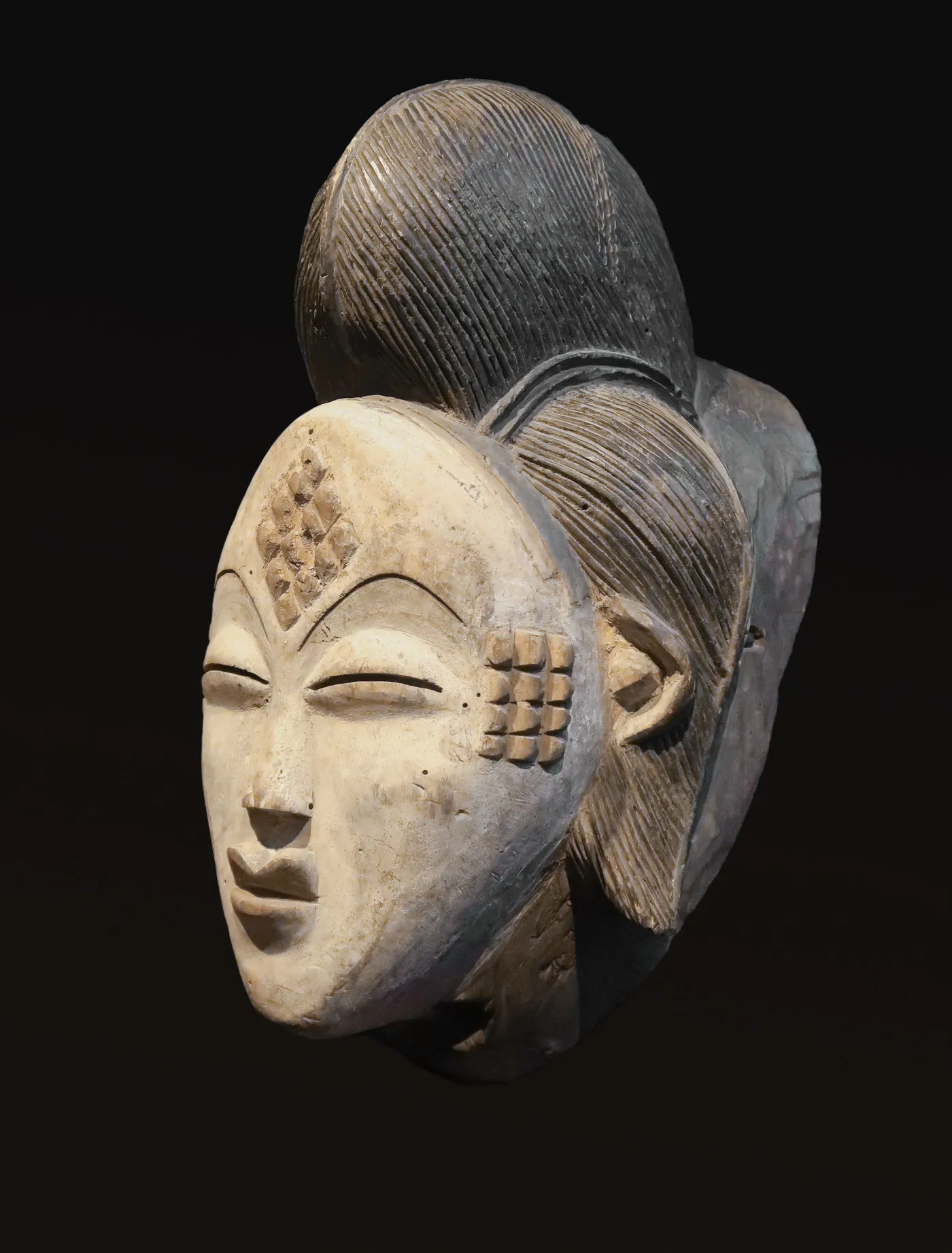
Among the Myene of the coast, the Bwiti lives alongside initiatory societies that are not branches of the Bwiti but are in dialogue with it: the Ombwiri, a healing cult of the water spirits; the Ndjembè, the women’s society; the societies of the white okuyi mask, whose dances accompany mourning and celebrations. Raponda-Walker and Sillans describe them at length in Rites et croyances des peuples du Gabon. At Pointe-Denis, these traditions of the coast and the Bwiti meet under the authority of the throne of King Denis, as told in the article on the Mpongweand the one on the Bwiti Omengo.
The tree of the branches
And where does the Omengo fit in?
Beyond the great branches, the Bwiti lives through family branches: lineages of guardians who hand down, from generation to generation, a way of their own, with its songs and its rules. The Omengo of Maison Assiga, handed down at Pointe-Denis since King Denis Rapontchombo and linked to the Disumba trunk, is one of them: its story is told in the article devoted to it. It is also the tradition of the clan to invite to the temple the great Bwitists of the other branches, Missoko, Ngondet or Apindji: beneath the tree, the ways answer one another.
Sources
- André Raponda-Walker and Roger Sillans, Rites et croyances des peuples du Gabon, Paris, Présence africaine, 1962: archive.org; review in L'Homme, 1963: Persée.
- Julien Bonhomme, Le miroir et le crâne. Parcours initiatique du Bwete Misoko (Gabon), Paris, CNRS Éditions / Éditions de la MSH, 2006.
- Otto Gollnhofer and Roger Sillans, La mémoire d'un peuple. Ethno-histoire des Mitsogho, ethnie du Gabon central, Paris, Présence africaine, 1997.
- On the temple at Pointe-Denis and the transmission within the House: The Bwiti temple of King Denis and The Bwiti Omengo of Maison Assiga; the reading of the 1861 building as a temple and the Omengo branch belong to the oral tradition of the House of Rapontchombo, and are presented as such.
- Objects and instruments cited: see the Archives page, with the museums’ inventory numbers.