

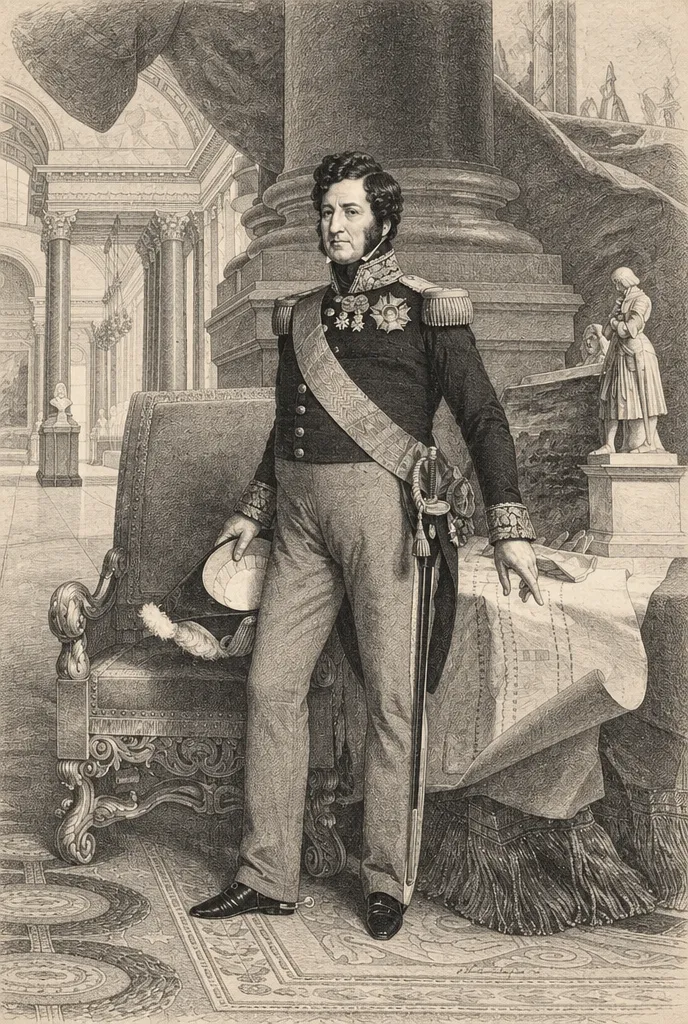
On 16 September 1839, in Paris, Louis-Philippe, King of the French, signed a royal ordinance without precedent: it appointed as knight of the Legion of Honour, “for exceptional services rendered” (« pour services exceptionnels rendus »), a king of equatorial Africa, Louis Denis Marie Félix Adandé Rapontchombo, King Denis II, son of the reigning King Denis I, Antchouwé Kowé Rapontchombo. He was the first man from sub-Saharan Africa to receive France’s highest distinction, created by Napoleon thirty-seven years earlier. The written sources speak of “King Denis”; family tradition attributes this decoration to Denis II.
The year of the treaty
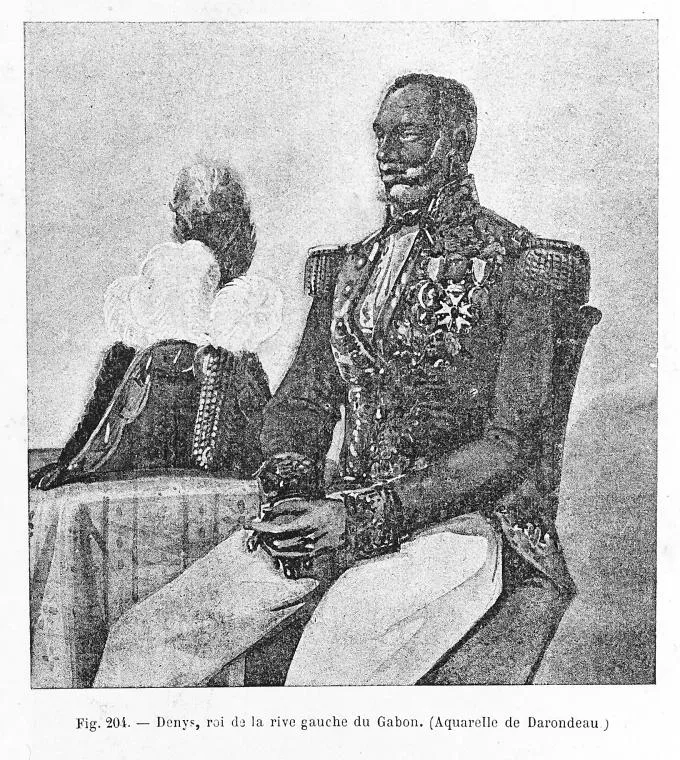
Everything happened in the same year. On 9 February 1839, aboard a French ship anchored in the estuary, Lieutenant Édouard Bouët-Willaumez, accompanied by Captain Broquant for the Bordeaux chamber of commerce, signed with King Denis I the convention authorising France to found a settlement on the Gabon estuary; it was his son, Denis II, who had drafted it. The sovereign of the left bank, who spoke several European languages and negotiated as an equal, became France’s principal interlocutor on this coast. From this expedition dates the watercolour by Stanislas Darondeau, the painter on board. His “King Denys” is identified by the family as King Denis II, Louis Denis Marie Félix Adandé Rapontchombo, son of King Denis I.

The knight’s cross
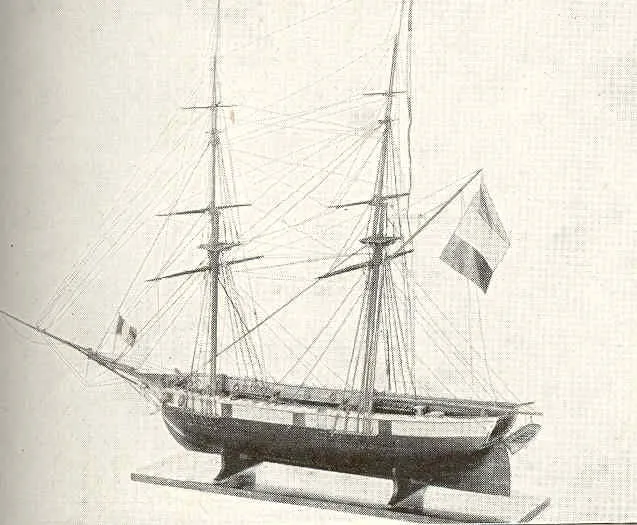
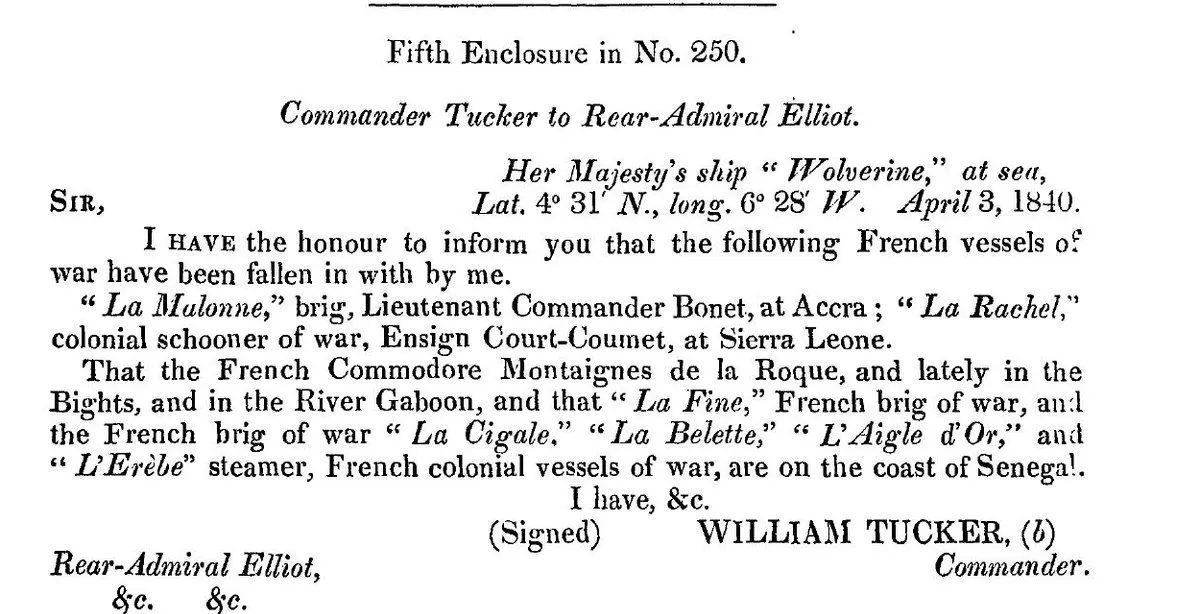
Seven months after the treaty, the cross arrived. The “exceptional services” that the ordinance rewarded are described by the sources of the time: the constant protection of the Europeans of the estuary, shipwrecked sailors, traders and missionaries, and the word given in February and then kept, in the convention Denis II had drafted. That same year, his father King Denis I rescued four wounded English sailors from captivity, which earned him Queen Victoria’s gifts: in 1839, Paris and London honoured, through the father and the son, the same House.
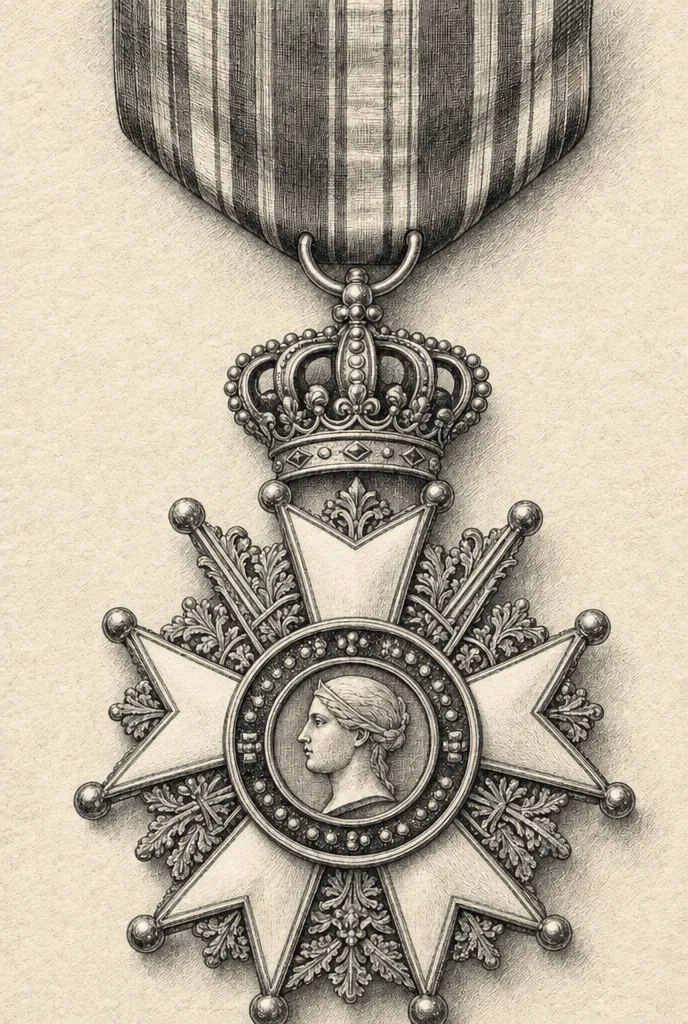
The gifts of the King of the French
To the knight’s cross, Louis-Philippe added a silver-gilt medal struck in the name of the Ministry of the Navy. The King of the French was then at the height of his work of remembrance: two years earlier, in 1837, he had inaugurated at the château de Versailles the Historical Galleries dedicated “to all the glories of France” (« à toutes les gloires de la France »). It was this France, proud of its history and its navy, that inscribed the name of a king of the Gabon estuary in the register of its most prestigious order.
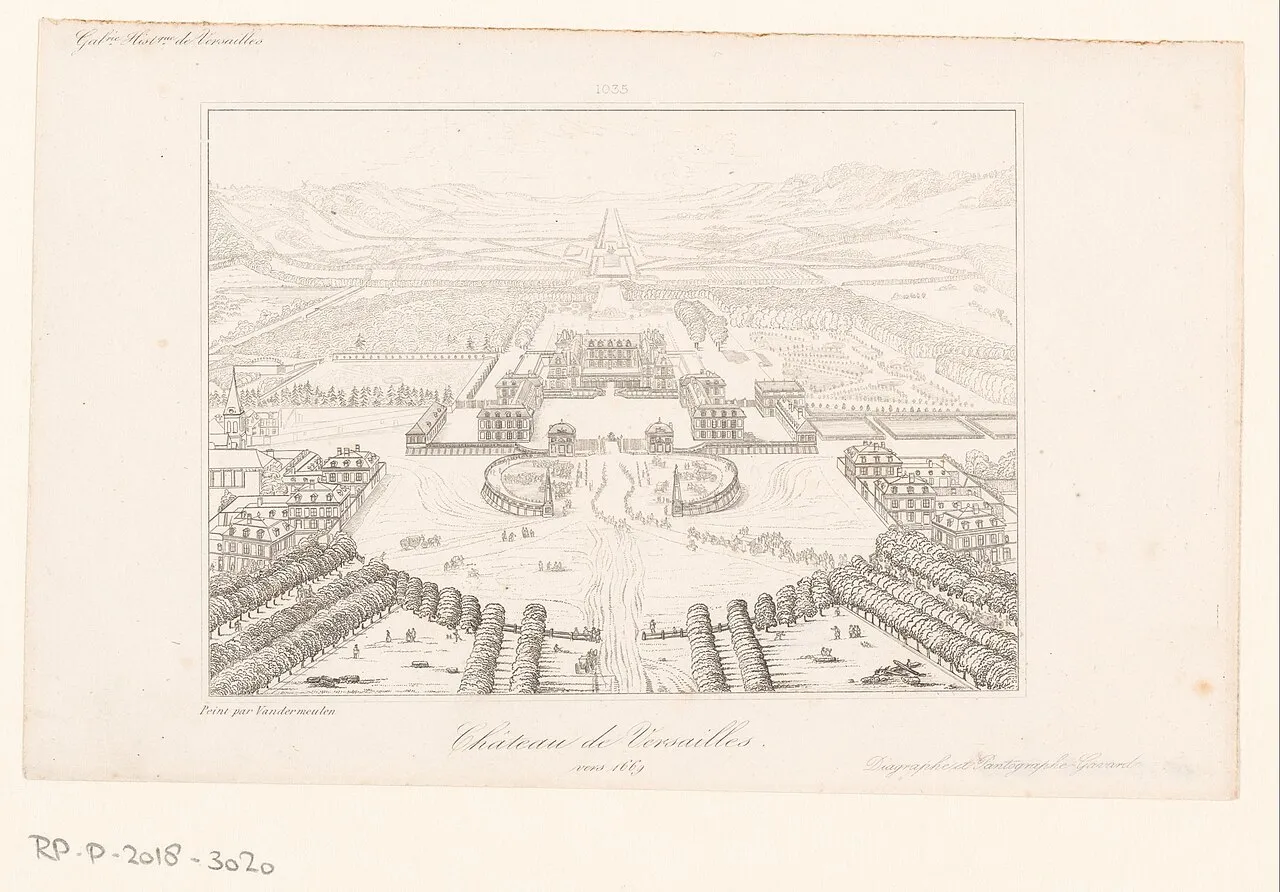
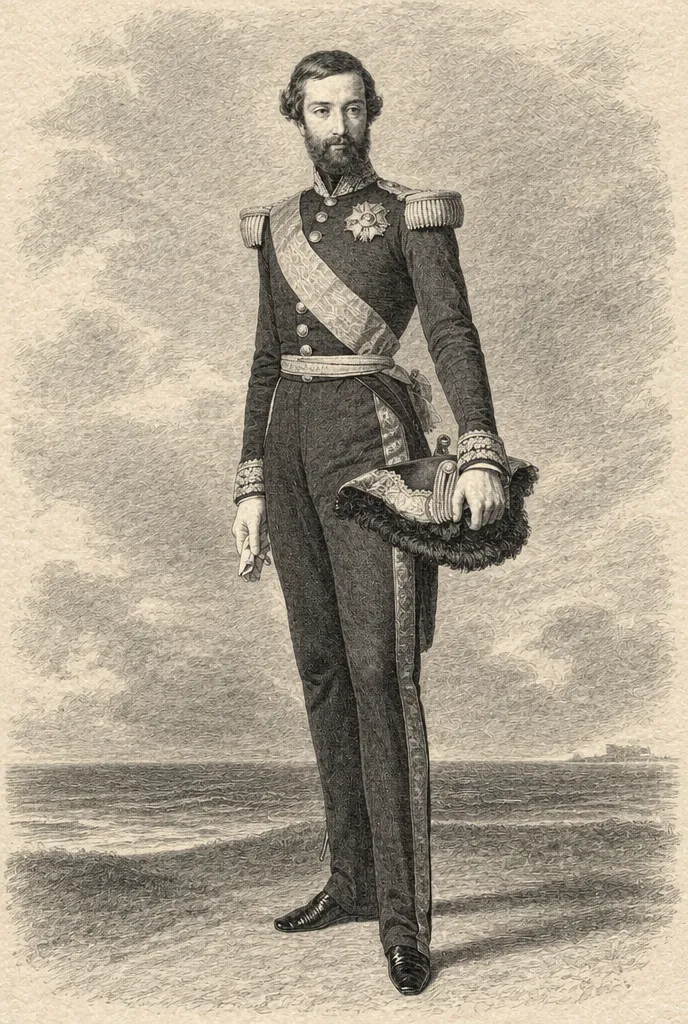
The Prince de Joinville and the cannon salute
The king’s third son, François d’Orléans, Prince de Joinville, was a sailor: it was he who brought knowledge of these coasts to the royal family. He obtained for King Denis privileges that naval etiquette reserves for sovereigns: when his pirogue came alongside a French ship, the cannon thundered in salute, and at banquets on board his place was at the admiral’s right hand.
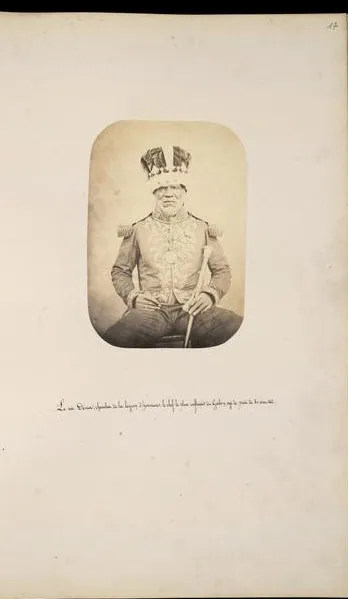
The honours of the House
Twenty-three years later, in 1862, the photographer Auguste Houzé de l’Aulnoit captured the image of King Denis I in majesty: crown, uniform with epaulettes, sabre, decorations. Beneath the print held at the musée du quai Branly - Jacques Chirac, a 19th-century hand calligraphed the caption: “knight of the Legion of Honour, the most influential chief of Gabon”. The written word lends the cross to the reigning king; the family returns it to his son, Denis II. Alongside the crown jewels and the Pope’s medal, the memory of the House of Rapontchombo keeps the cross of France in that rank: an honour paid, before the founding of Libreville, to kings who dealt with the powers as sovereigns.
From Louis-Philippe to the present day: the House of Orléans
The hand that signed the ordinance of 1839 has a living line: from father to son, seven generations lead from Louis-Philippe to the present Count of Paris, head of the House of Orléans.
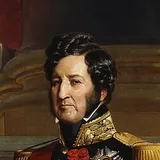 Louis-Philippe I1773-1850 · King of the French from 1830 to 1848 · who made King Denis II a knight of the Legion of Honour
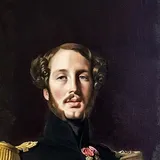 Ferdinand-Philippe, Duke of Orléans1810-1842 · son of Louis-Philippe, Prince Royal
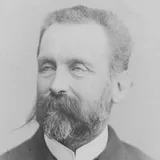 Robert d’Orléans, Duke of Chartres1840-1910 · son of Ferdinand-Philippe
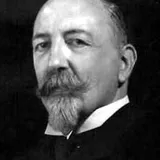 Jean d’Orléans, Duke of Guise1874-1940 · son of Robert, Duke of Chartres
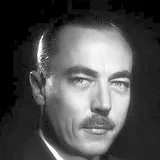 Henri d’Orléans, Count of Paris1908-1999 · son of Jean, Duke of Guise
 Henri d’Orléans, Count of Paris1933-2019 · son of the previous Count of Paris
 Jean d’Orléans, Count of Parisborn 1965 · son of Henri (1933-2019), present head of the House of Orléans
Portraits: Louis-Philippe after Winterhalter, Ferdinand-Philippe by Ingres, photographs by Chalot and Studio Harcourt · Wikimedia Commons, public domain; Henri d’Orléans (1933-2019), photograph by Phidelorme, and Jean d’Orléans, photograph by Lys-Jaune · Wikimedia Commons, CC BY-SA 4.0.
Sources
- On the ordinance of 16 September 1839 and the precedence of the distinction: « Denis Rapontchombo », Wikipédia.
- On the citation “for exceptional services rendered”, the silver-gilt medal of the Ministry of the Navy and the privileges obtained by the Prince de Joinville: « Denis Rapontchombo », Miboue.
- The treaty of 9 February 1839: convention between King Denis and Lieutenant Bouët, Archives nationales d'outre-mer, FR ANOM 40 COL 436.
- Images: Louis-Philippe and the Prince de Joinville by Winterhalter (1841, 1843), château de Versailles; view of Versailles, plate from the Galeries historiques, Rijksmuseum; watercolour by Darondeau (1839) via Wikimedia Commons; photograph of 1862, musée du quai Branly - Jacques Chirac (inv. 70.2008.16.2.17). All in the public domain; see the Archives page of this site.