

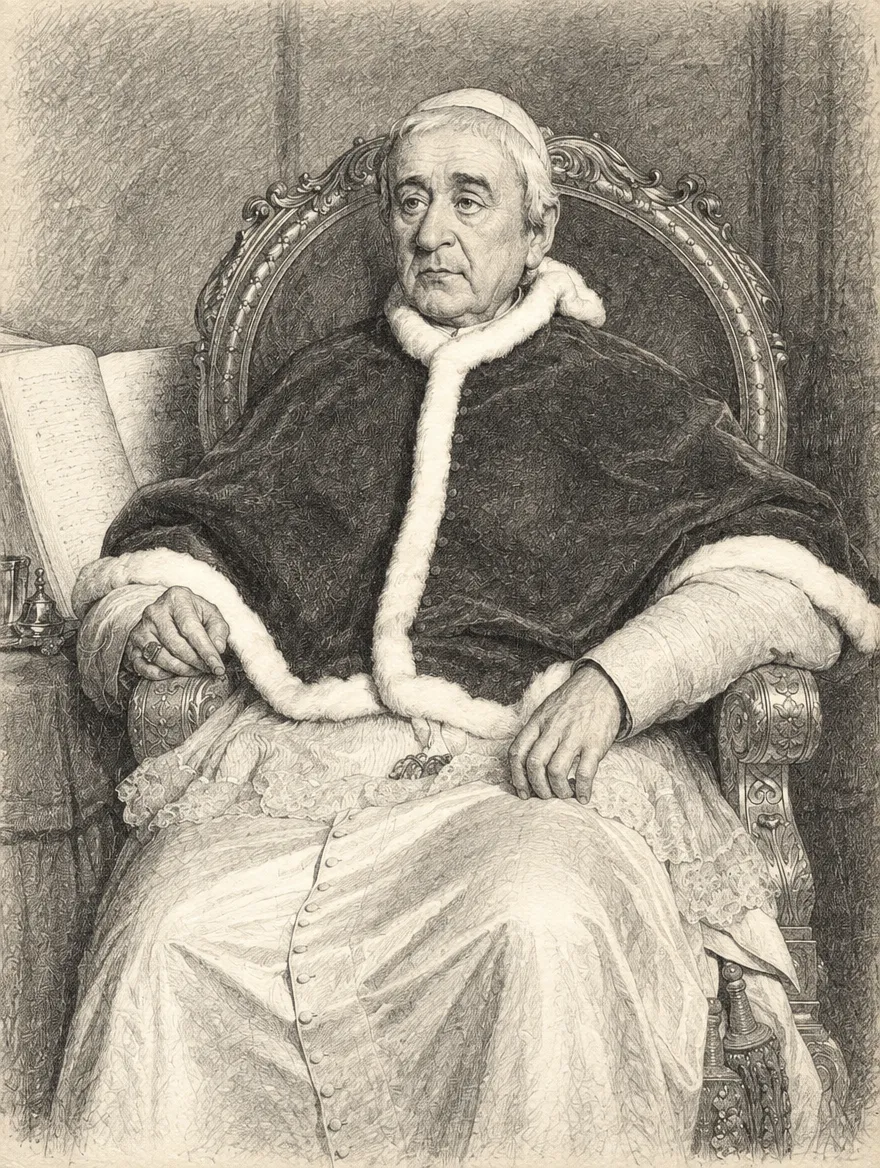
After London and Paris, Rome. Among the tokens of gratitude received by King Denis Rapontchombo is a medal sent by Pope Gregory XVI, struck with two Latin words, “Bene merenti”: “to one who has deserved well”. In the Europe of that time, Italy did not yet exist as a state: the voice that spoke from Rome was that of the Supreme Pontiff, and his gift carried the weight of moral recognition as much as of a diplomatic honour.
What the Bene merenti medal is
The “Bene merenti” medal is one of the oldest papal distinctions: instituted in the 18th century under Pius VI, it rewards those who have rendered eminent service, first military, then of every kind. It is not an order of chivalry: it is a thank-you, engraved in metal, addressed personally by the Pope. That this thank-you crossed the seas to the Gabon estuary, to a sovereign who was not a Christian by birth, says enough about the reach of the gesture.
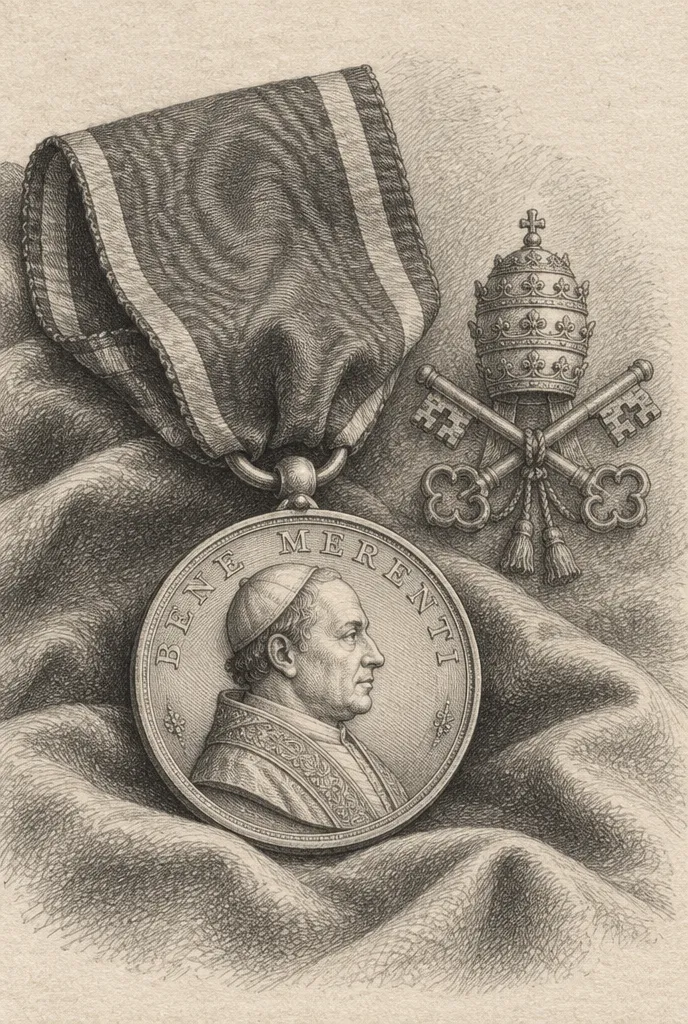

Why Rome looked towards the estuary
The pontificate of Gregory XVI (1831-1846) crossed the history of King Denis at two points. In December 1839, by the apostolic letter In supremo apostolatus, the Pope solemnly condemned the slave trade: and it was in that same year of 1839 that King Denis rescued from captivity four English sailors wounded during the capture of a slave ship, the deed that Queen Victoria rewarded. In Rome’s eyes, the king of the estuary had just accomplished, at the far end of the world, exactly what the papal letter asked of Christendom: to hold human life above the trade in human beings.
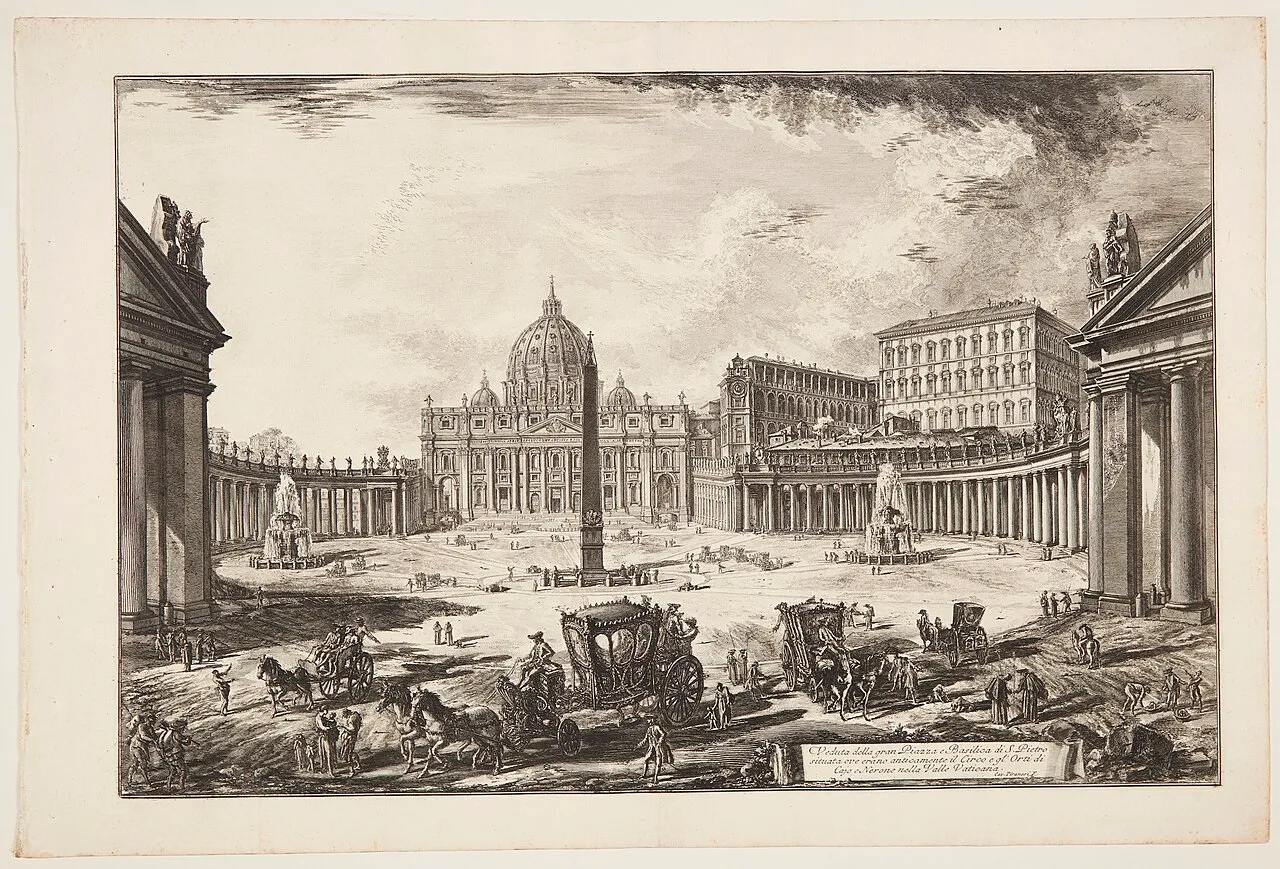
And it was under this same pontificate that the first Catholic missionaries reached the estuary: Father Jean-Rémy Bessieux and Brother Grégoire Sey landed in Gabon on 28 September 1844 and founded the Sainte-Marie mission there, welcomed on shores where King Denis was the most influential sovereign. The protection the king constantly extended to the Europeans of the estuary, missionaries included, is attested by every source of the time: it is this protector whom Rome was thanking.
The family biography says so in so many words: Pope Gregory XVI “sent him a fine ‘Bene merenti’ medal to thank him for his good offices towards the Catholic missionaries”. The date of the presentation has not been preserved, but it can be deduced: after the arrival of the missionaries on 28 September 1844, and before the death of Gregory XVI on 1 June 1846. The medal therefore dates from 1844-1846.
The third jewel
Victoria’s gold chain and medal, Gregory XVI’s “Bene merenti” medal, and the cross of the Legion of Honour that Louis-Philippe gave to his son, King Denis II, Louis Denis Marie Félix Adandé Rapontchombo: within a few years, London, Paris and Rome had honoured the master of the estuary and his House, each in its own language and after its own custom. The memory of the House of Rapontchombo keeps these tributes as a single treasure: the jewels of a reign that dealt with the powers of the century without ever ceasing to be the guardian of its people’s rites.
From Gregory XVI to the present day: the succession of Peter
A pope leaves no descendants, but a see: since Gregory XVI, fourteen pontiffs have sat on the chair of Peter, and Leo XIV is today the thirteenth successor of the pope who thanked King Denis.
 Gregory XVIpope from 1831 to 1846 · who sent King Denis the “Bene merenti” medal
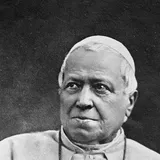 Pius IXpope from 1846 to 1878
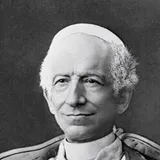 Leo XIIIpope from 1878 to 1903
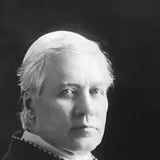 Pius Xpope from 1903 to 1914
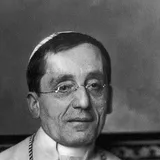 Benedict XVpope from 1914 to 1922
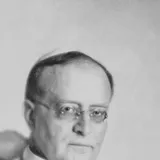 Pius XIpope from 1922 to 1939
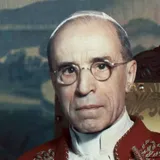 Pius XIIpope from 1939 to 1958
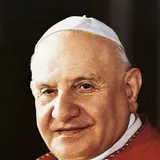 John XXIIIpope from 1958 to 1963
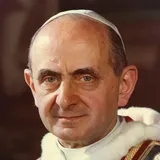 Paul VIpope from 1963 to 1978
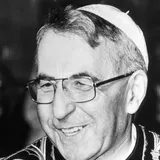 John Paul Ipope in 1978
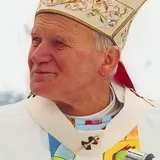 John Paul IIpope from 1978 to 2005
 Benedict XVIpope from 2005 to 2013 · renounced the papacy
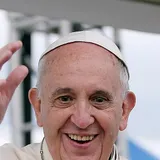 Francispope from 2013 to 2025
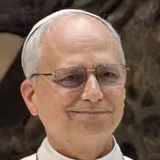 Leo XIVpope since 2025
Portraits: Gregory XVI by Paul Delaroche; photographs by Adolphe Braun, Braun et Cie, E. W. Histed, Nicola Perscheid, Michael Pitcairn, De Agostini, Felici and Anefo · Wikimedia Commons, public domain. John Paul II, photograph by Gregorini Demetrio, and Benedict XVI, photograph by Medialpj, CC BY-SA 3.0; Francis, photograph by Jeon Han, Korea.net, CC BY-SA 2.0; Leo XIV, photograph by Edgar Beltrán, The Pillar, CC BY-SA 4.0 · Wikimedia Commons.
Sources
- On the “Bene merenti” medal sent to King Denis by Gregory XVI: « Denis Rapontchombo », Miboue.
- On the papal Bene merenti distinction and its history: Association des Chevaliers Pontificaux.
- On Gregory XVI’s condemnation of the slave trade (In supremo apostolatus, 3 December 1839): papal text, Vatican archives.
- On the arrival of Father Bessieux and Brother Grégoire Sey on 28 September 1844 and the Sainte-Marie mission: « Jean-Rémy Bessieux », Wikipédia; « Les travaux et les jours de la Mission Sainte-Marie du Gabon (1845-1880) », Persée.
- Images: portrait of Gregory XVI by Paul Delaroche; view of Saint Peter’s Square by Piranesi (1772), Statens Museum for Kunst; interpretative engraving of the medal, House of Rapontchombo. Public domain unless otherwise stated.