

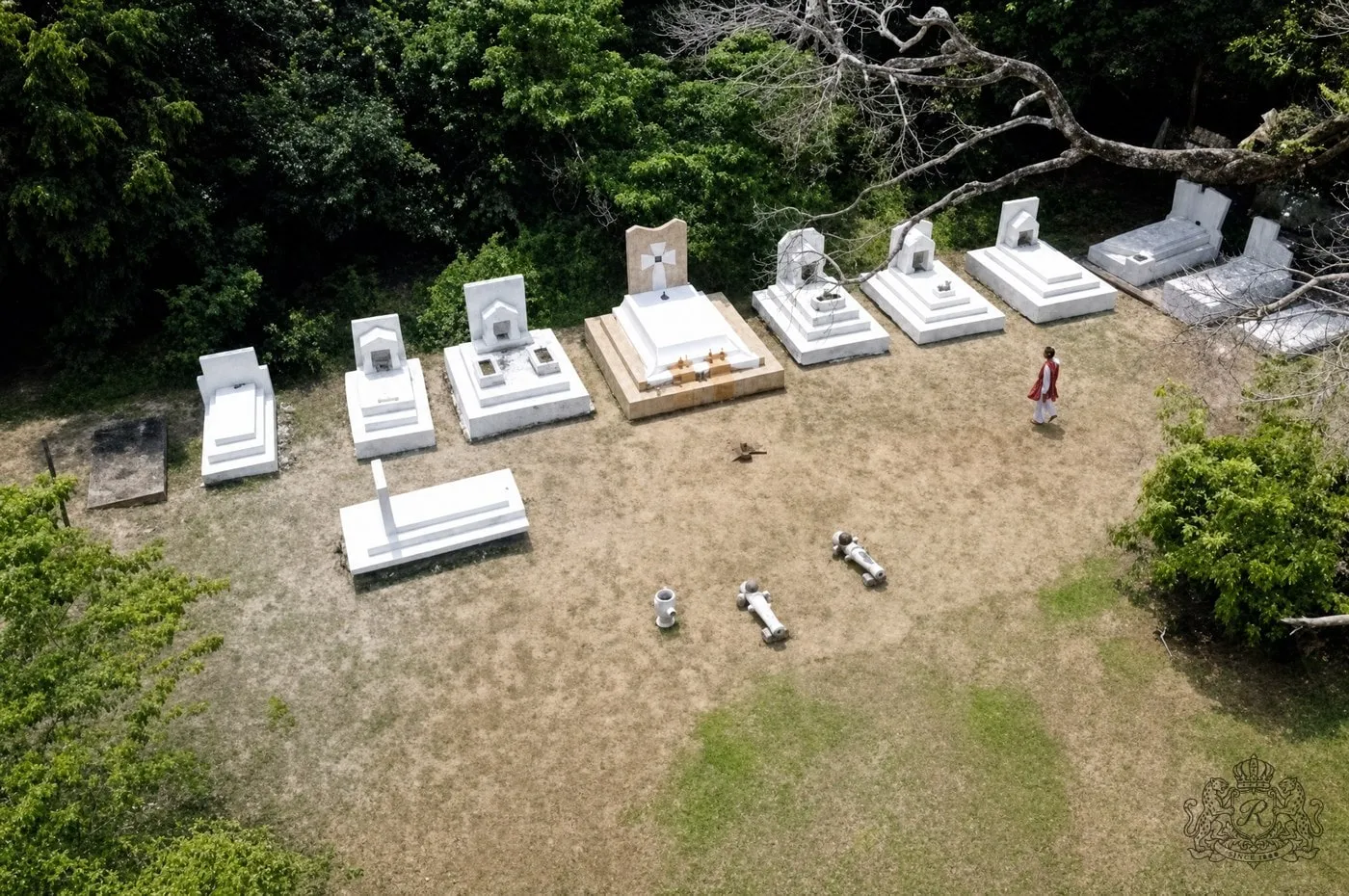
This is the most sacred place on the Domain. At the edge of the Pointe-Denis forest, a row of white tombs surrounds that of King Denis I, Antchouwé Kowé Rapontchombo, set in the centre on its base of pale stone and marked with a cross. Around him rest his descendants and their wives: two kings, princes and princesses, and those who, generation after generation, kept the land and the regalia of the House.
9 May 1876: the king's funeral
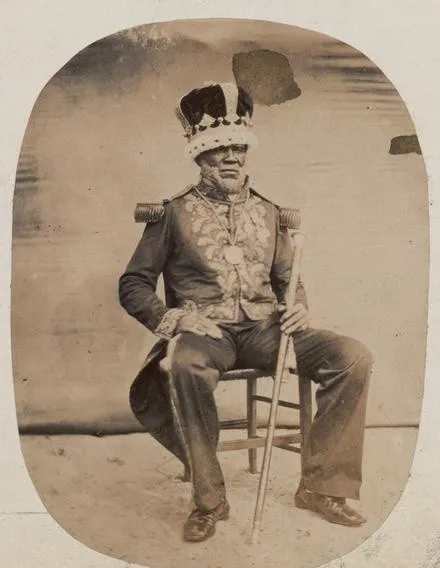
The king died almost a centenarian on 9 May 1876, on the land of his ancestors that he had refused to leave. He had laid down his own funeral and, unlike the custom of the great chiefs of his time, forbade that slaves be sacrificed at his death. The historian Elikia M'Bokolo describes an unequalled gathering: the Mpongwe chiefs, the Fang of the left bank, the Orungu notables of Cape Lopez and the Nkomi of the Fernan-Vaz; in Libreville the French authorities lowered their flags to half-mast and fired the cannon.
“Dressed in his full uniform of a British general, King Denis Rapontshombo was buried in the old cemetery of Iwounwé, between Pongara Point and Nghomboué Point, facing the ocean that had brought him the Europeans, his friends.”
Those who rest at Iwounwé
The family names the tombs in the order in which they appear in the aerial photograph, from left to right. King Denis I is in the centre; on his right, that is on the left of the picture, his son, King Denis II. The row forms an L: at its right-hand end it turns and runs down towards the foreground. One tomb stands set back, behind that of Princess Virginie Ambougou, and a last one is laid crosswise, in front of the row.
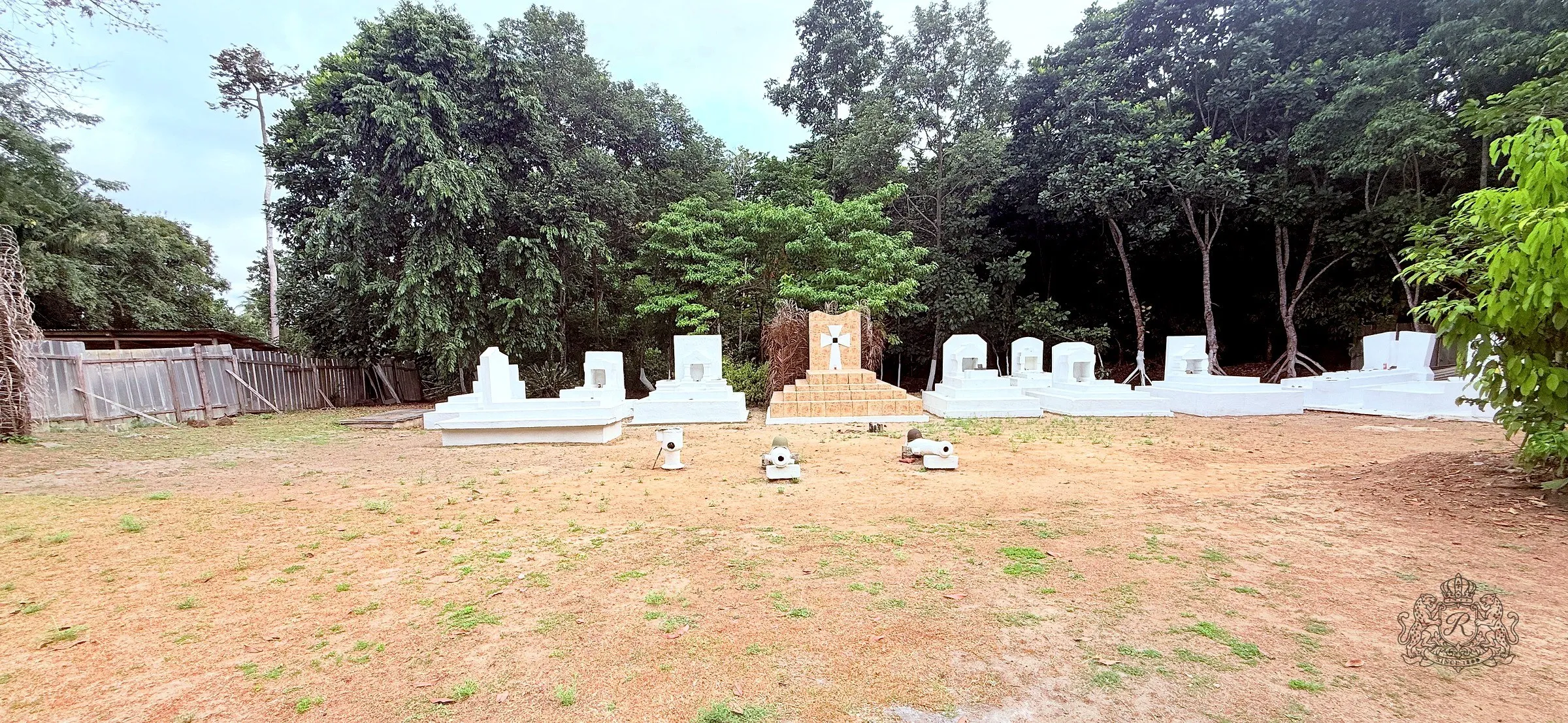
Schematic plan in the order given by the family, from left to right as in the photograph. Hover over or tap a name to see its place.
The family also recalls that Prince Onanga Adandé Rapontchombo, son of King Denis II and father of Prince Denis Marie Félix, rests in the burial ground.
The tomb laid crosswise
The row has its own story, and the family tells it. The place after the tomb of King Denis II belonged to Prince Denis Marie Félix Adandé Rapuntchombo, head of the family in his day. When Prince Henri Adandé died, the prince refused to have him buried there; Princess Virginie Ambougou, his mother, had agreed, and it was her other son, Prince Otoki, who came to bury his brother after the second king.
Prince Denis Marie Félix then asked to rest not at Iwounwé but in the Plein-Niger cemetery, where the family owns land. At his death in 1971, however, his eldest son Ajax and his brothers decided to bring him back to the royal burial ground. Once again it was Otoki who chose his place: he laid the tomb vertically, parallel to the others, to keep the whole in symmetry. The burial ground, the family says, was meant to close at that point; it went on.
The Plein-Niger cemetery is the old cemetery of Libreville's Mpongwe community, on the right bank. The prince's choice would thus have taken him away from his ancestors: the map shows the distance between the two places, on either side of the estuary.
The cannons and the panthers
In front of the tombs, three old cannons lie in the grass. The family does not know for certain whether they were given by France or by Britain, the two powers that honoured the king in 1839 and 1840. Their story, however, has been handed down from generation to generation: when the cannon of the European ships boomed across the estuary, the other kings hid; King Denis alone came out, to go and meet the white men and speak with them.
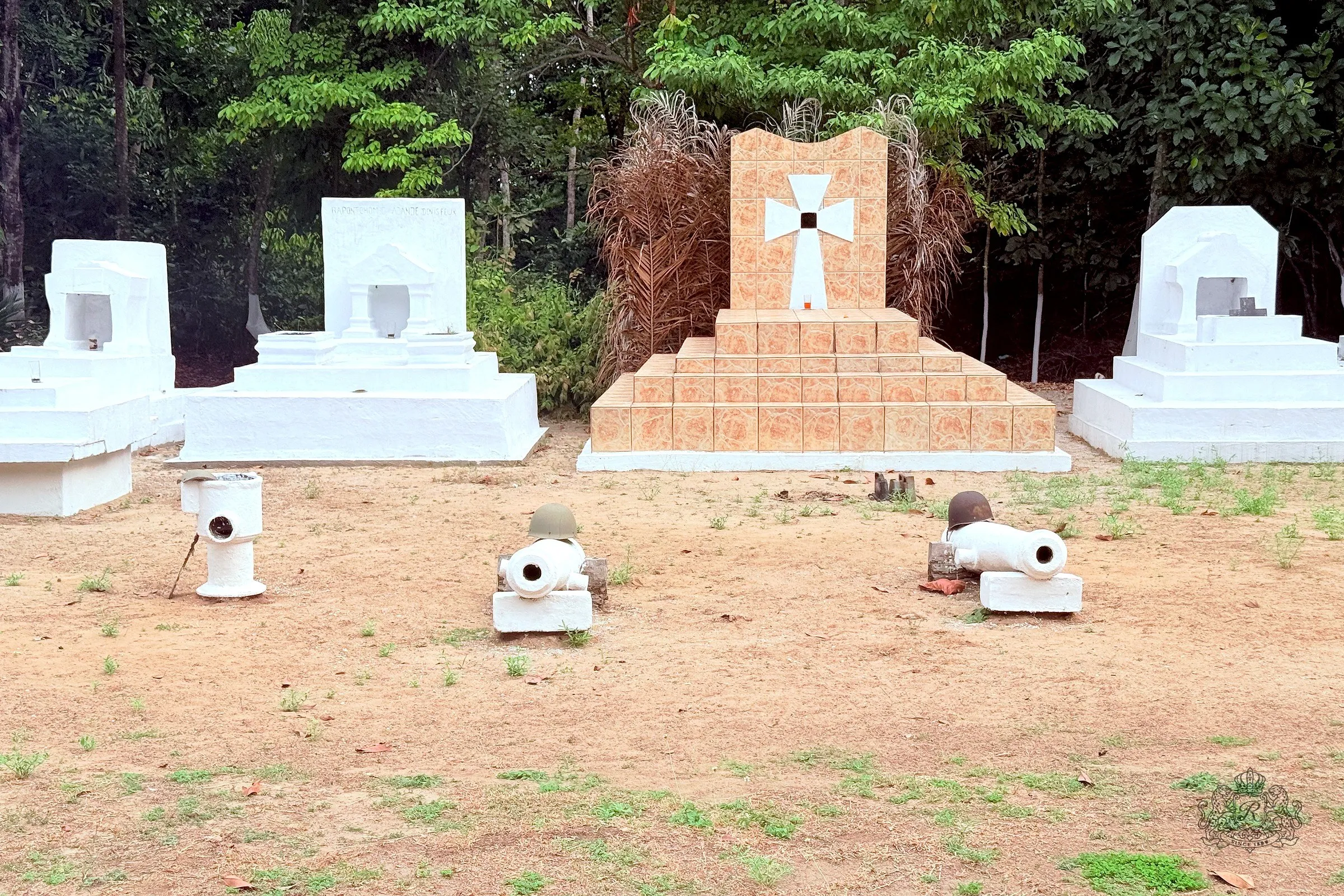
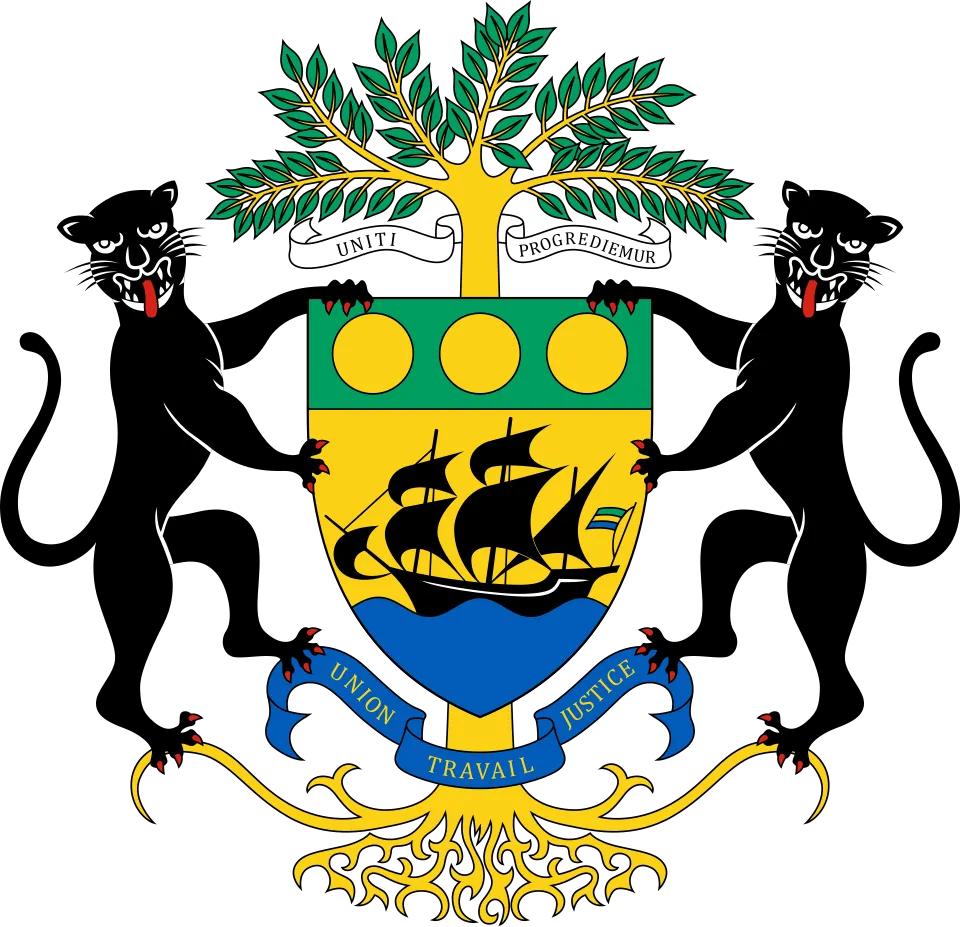
Family tradition attaches a tale to it. In the forest a mother panther comes out; the king whispers in her ear, and she brings out her two cubs, who take their places to the left and right of the arms of the Assiga clan. For the family, these are the two panthers found today on either side of the coat of arms of the Gabonese Republic, adopted in 1963.
“This is our story.”
A living place
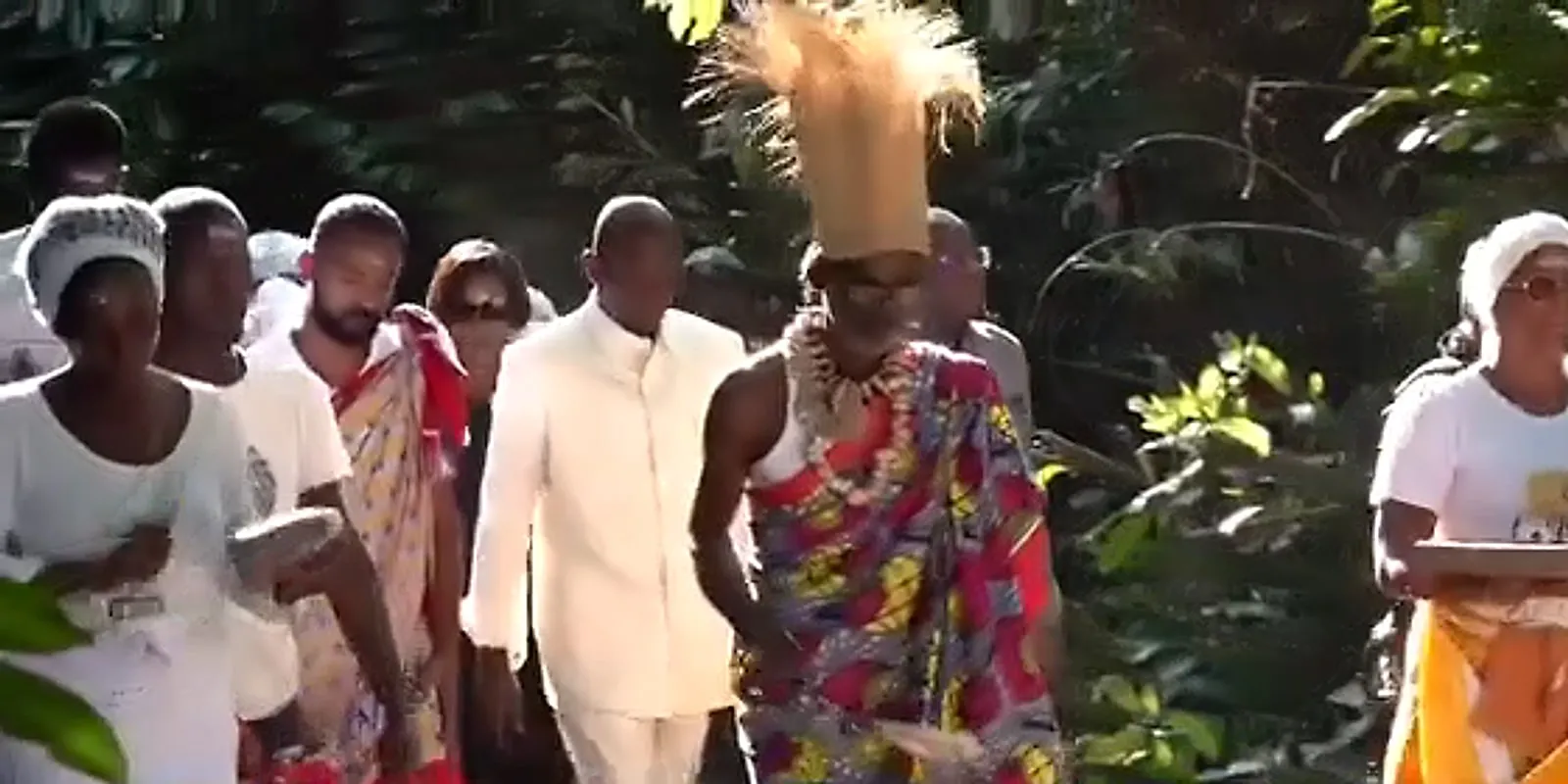
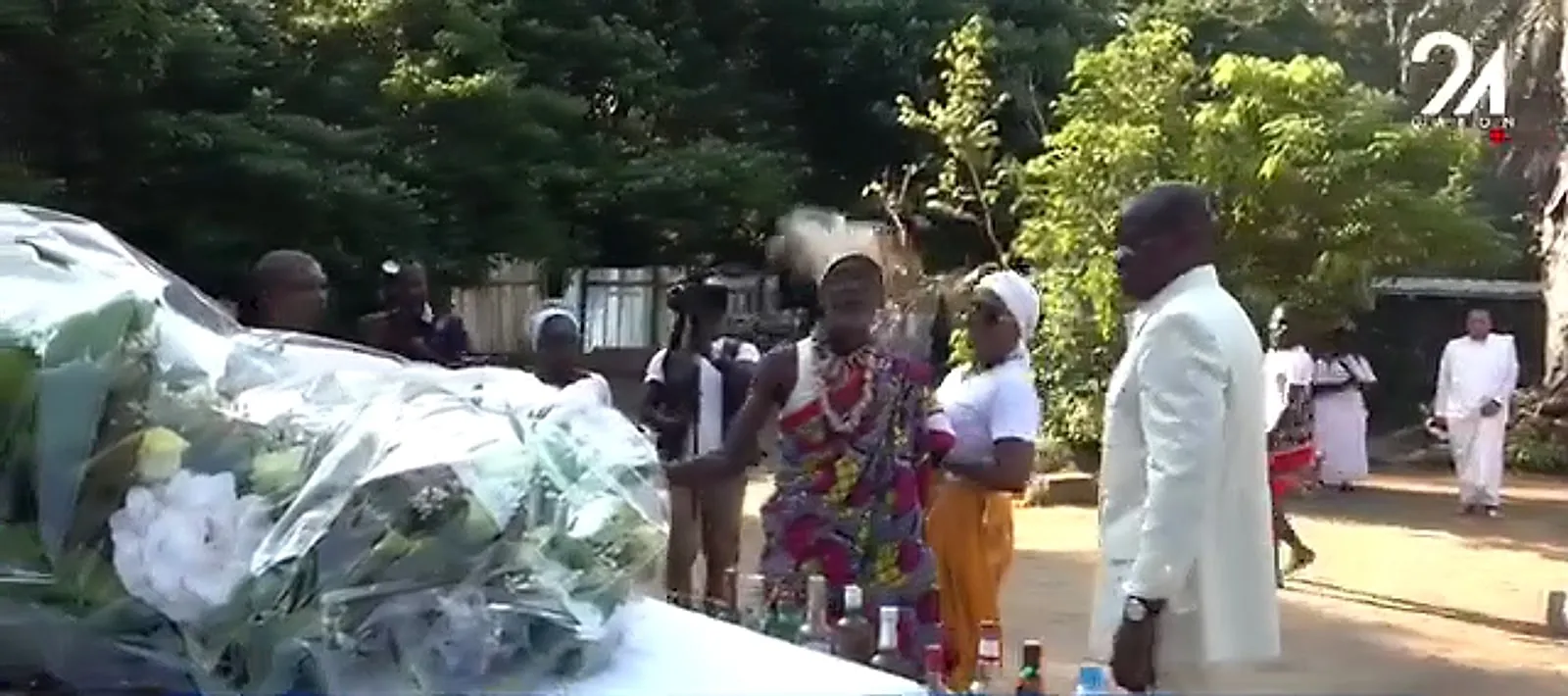
The burial ground is not a frozen place. The ceremonial is held there every year and, during the initiation, offerings are brought there in thanks to the family's departed. In 2015 more than fifty kings and traditional chiefs of Africa gathered there forthe tribute of 2 August; in March 2025 the President of the Gabonese Republic, Brice Clotaire Oligui Nguema, came to pay his respects.
Each name on this plan appears in the House's family tree, with its sources; the king's life is told inAntchouwé Kowé Rapontchombo, King Denis I: a life and in King Denis according to Elikia M'Bokolo.
Sources
- The family's testimony: the order of the tombs and the story of the row, given by Jacques Makaya Zimamo and his family during the review of the site, October 2026.
- Abbé André Raponda-Walker, Notes d'histoire du Gabon, Mémoires de l'Institut d'Études Centrafricaines no. 9, Brazzaville, 1960: the king's burial at Iwounwé.
- Elikia M'Bokolo, « Le roi Denis, grandeur et déclin d'un souverain gabonais », Les Africains, Éditions Jeune Afrique, 1977, pp. 94-95: his last wishes and his funeral.