

From the Mitsogo world that saw the birth of the Disumbacomes the Bwiti Missoko (or Misoko): the way of the ngangas, healers, seers and masters of diagnosis. Where the Disumba is first and foremost a society of knowledge of origins, the Missoko is turned towards care. People often enter it because life has asked it of them: to be healed, to understand the origin of a misfortune, or to receive in turn the charge of healing. It is this branch that Maison Assiga follows, and it is within its framework that the initiation at Pointe-Denis is lived.
The night, the mirror and the diagnosis
The Missoko initiation is a passage: under the guidance of a spiritual father, the novice enters the temple and passes through the night of vision that makes him an initiate. The anthropologist Julien Bonhomme, who followed its course in the field, described it in Le miroir et le crâne (2006), the standard study of this branch: it shows how the Missoko trains the eye of the nganga, the one who can see the hidden origin of ills and answer them. The bond between the initiate and his initiator lasts a lifetime; it is what gives the lineages their strength.
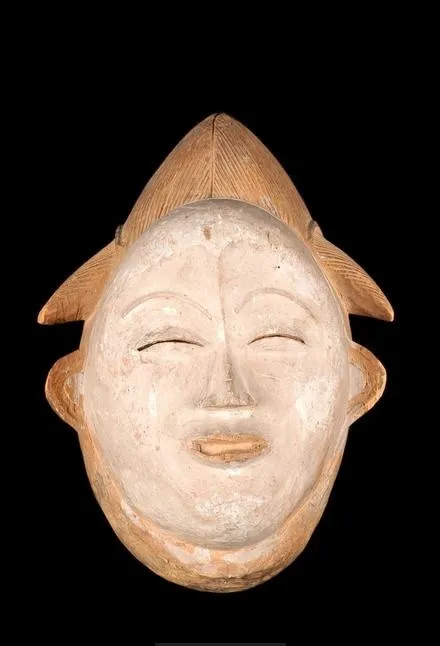
The Missoko at Pointe-Denis
On the lands of King Denis, the Missoko is a family matter. Jacques Makaya Zimamo, a descendant of the king and son of Princess Marie-Anne Ankombie Rapontchombo II, is consecrated to the Bwiti Missoko; he leads the annual ceremonial at the king’s tomb and watches over the tradition of the Domain. At the vigils he is accompanied by the spiritual fathers of the Missoko, notably Jérôme Mouele Niangou, whose lines of initiation are published on this site. The family branch that the House hands down under the name of Omengo belongs, for its part, to the Disumba trunk, and the tradition of the Assiga clan of inviting to the temple the great Bwitists of the other ways, from the Ngondet to the Disumba, finds its full meaning there.
Placing the Missoko in the tree
Sources
- Julien Bonhomme, Le miroir et le crâne. Parcours initiatique du Bwete Misoko (Gabon), Paris, CNRS Éditions / Éditions de la MSH, 2006.
- André Raponda-Walker and Roger Sillans, Rites et croyances des peuples du Gabon, Paris, Présence africaine, 1962: archive.org.
- On the House and its guardians: The Bwiti Omengo, the portrait of Jérôme Mouele Niangou and the Family tree page; the annual ceremonial of 2024 at the king’s tomb, on the Archives page.
- The trunk: Disumba; the branch of the Missoko: Ngondet; the branch of the House, springing from the Disumba: Omengo; the overview: What is the Bwiti?.