

Of all the branches of the tree of the Bwiti, the Ngondet is the one that best shows how this tradition is truly handed down: not through books, but through lineages. The published studies of the Bwiti barely mention it; the lines of initiation, however, keep its exact memory, name by name, from master to disciple. It is this living memory that a spiritual father of the House, Jérôme Mouele Niangou, agreed to commit to writing, and it is this memory that this article presents.
A branch handed down from guardian to guardian
In the Bwiti, each branch lives through its initiates: it exists neither in an institution nor in a register, but in the unbroken chain of those who have received it and passed it on. The Ngondet is a branch of the Missoko, the way of the ngangas and of vision; one enters it young, sometimes very young: Jérôme Mouele Niangou was initiated into it at the age of 8, after the Djombi Tawo Tawo received among the Massango at 5 and the Mwiri, and before later receiving the Disumba.
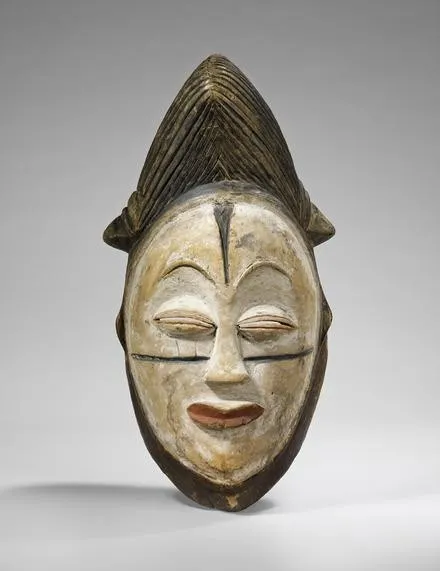
The lineage of the Ngondet, name by name
Here is the lineage of the Bwiti Ngondet as Jérôme Mouele Niangou handed it down, published with his consent. Each initiate bears two names: his administrative name and his Kombo, the customary name:
- Pascal Madouma (Kombo, customary name: Adoumaghana)
- Moussavou Mabounda Dessayo (Kombo: Doubila), initiated by Pascal Madouma
- Pierre Mbadingua (Kombo: Dibouba), initiated by Moussavou Mabounda Dessayo
- Jérôme Mouele Niangou (Kombo: Niangou), initiated into the Bwiti Ngondet by Pierre Mbadingua
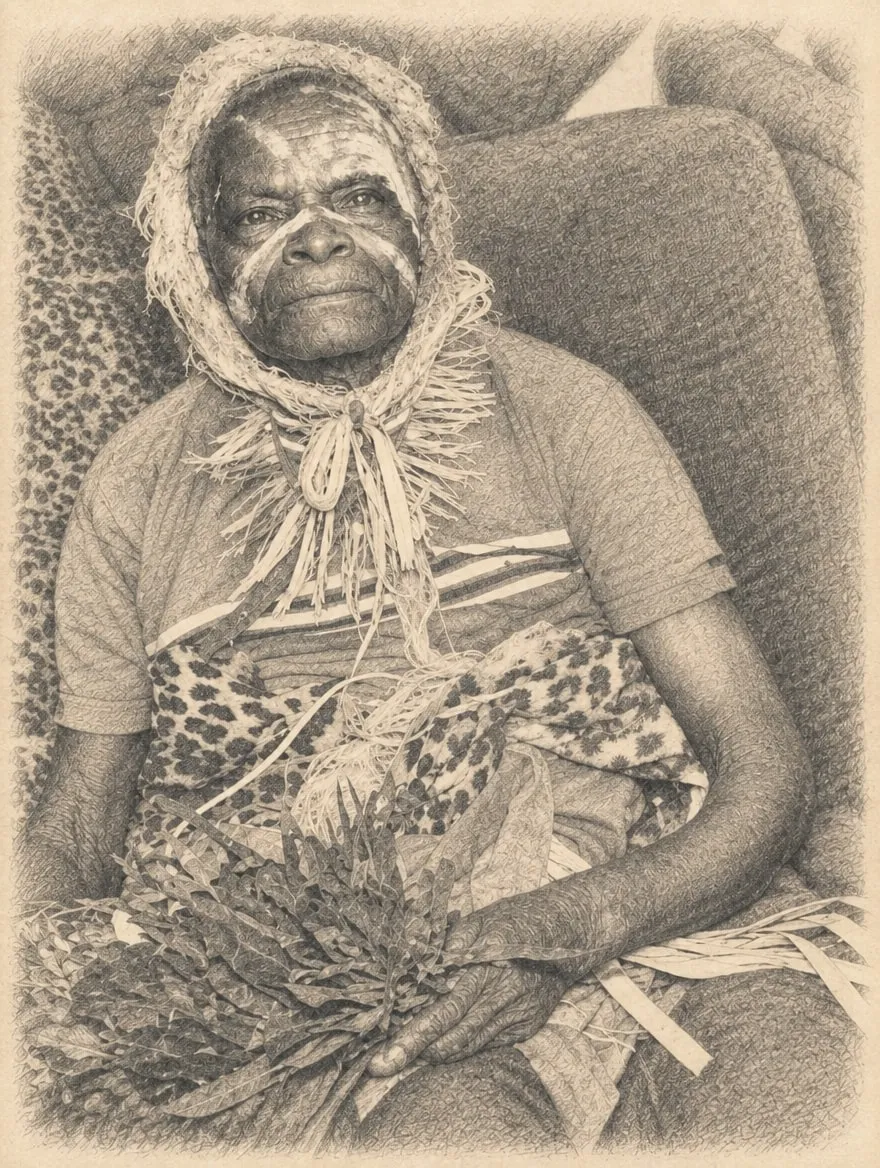
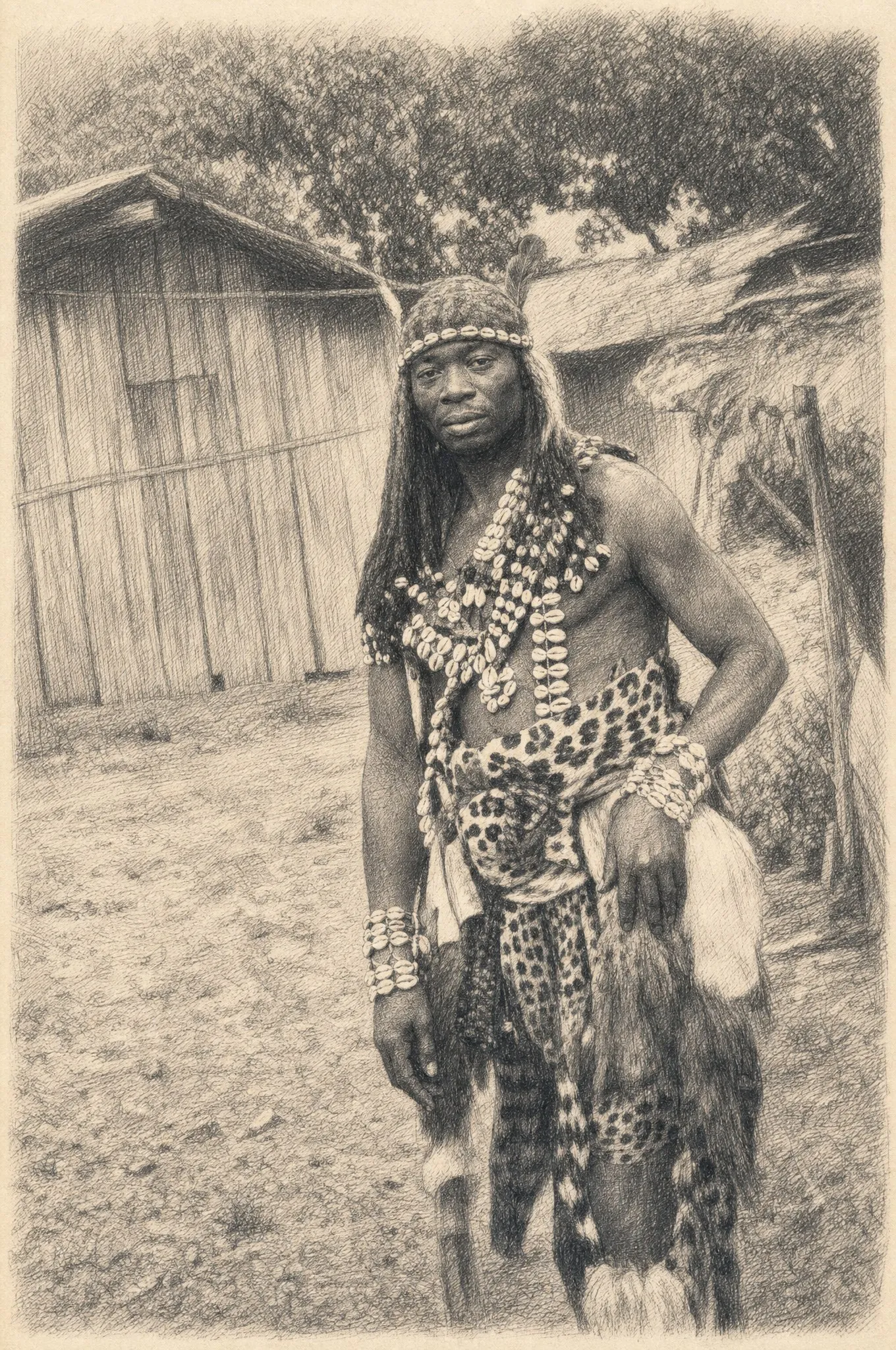
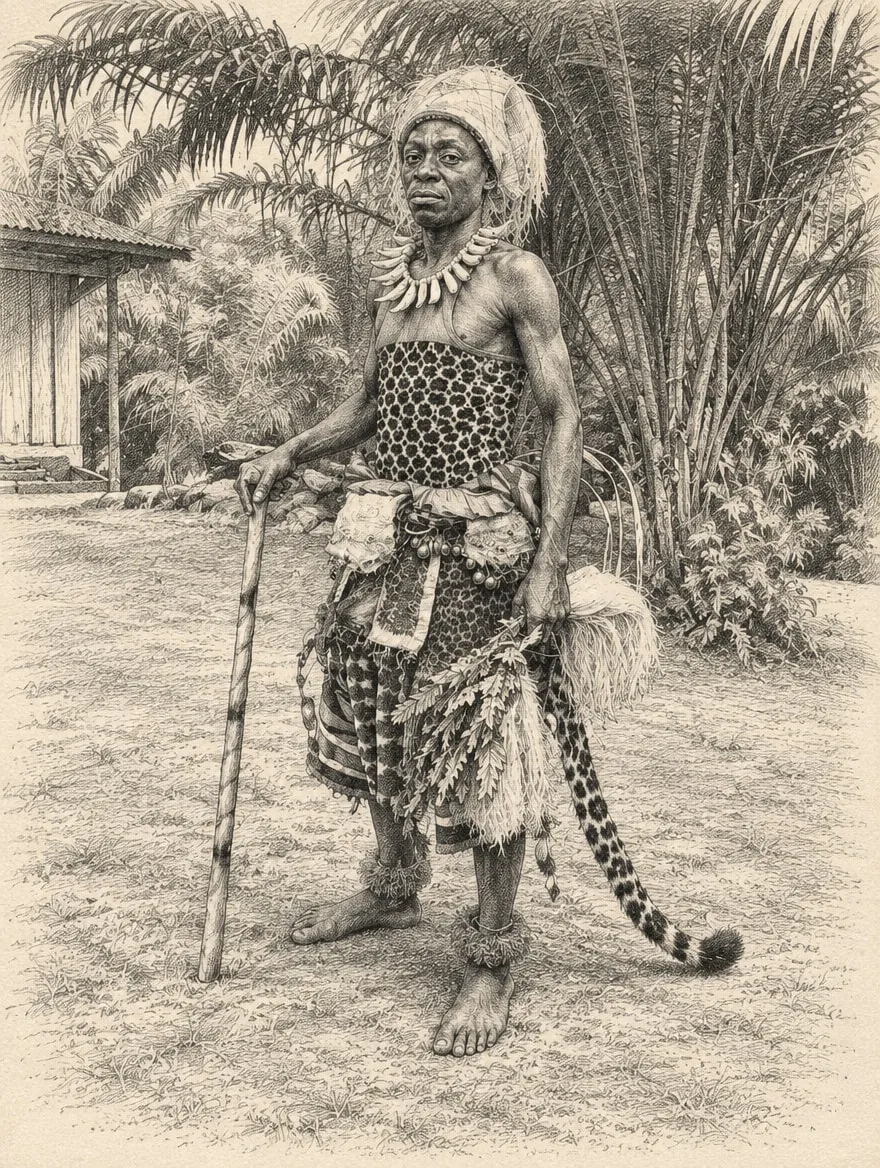
Four generations of men, their Kombo, the customary names, and a chain that reaches back beyond any written archive: that is what a branch of the Bwiti is. It is this same principle of lineage that underpins the Omengo branch of Maison Assiga at Pointe-Denis, and it is in the name of this principle that the tradition of the clan welcomes to the temple the initiates of the other ways, from the Disumba to the Missoko.
Placing the Ngondet in the tree
Sources
- The lineage of the Bwiti Ngondet and the initiatory journey were provided by Jérôme Mouele Niangou himself and are published with his consent: his portrait on this site.
- On the ways of the ngangas to which the Ngondet is close: Julien Bonhomme, Le miroir et le crâne. Parcours initiatique du Bwete Misoko (Gabon), Paris, CNRS Éditions / Éditions de la MSH, 2006.
- The other branches: Disumba, Missoko, Omengo; the overview: What is the Bwiti?.