

When Jérôme Mouele Niangou, the spiritual father who accompanies Maison Assiga, tells of his journey, everything begins among the Massango: it was among them that he received, at the age of 5, his first initiation, the Djombi Tawo Tawo. But who are the Massango? Here is what the published sources allow us to say of them, and why this mountain people matters on the spiritual map of Gabon.
A people of the Chaillu massif
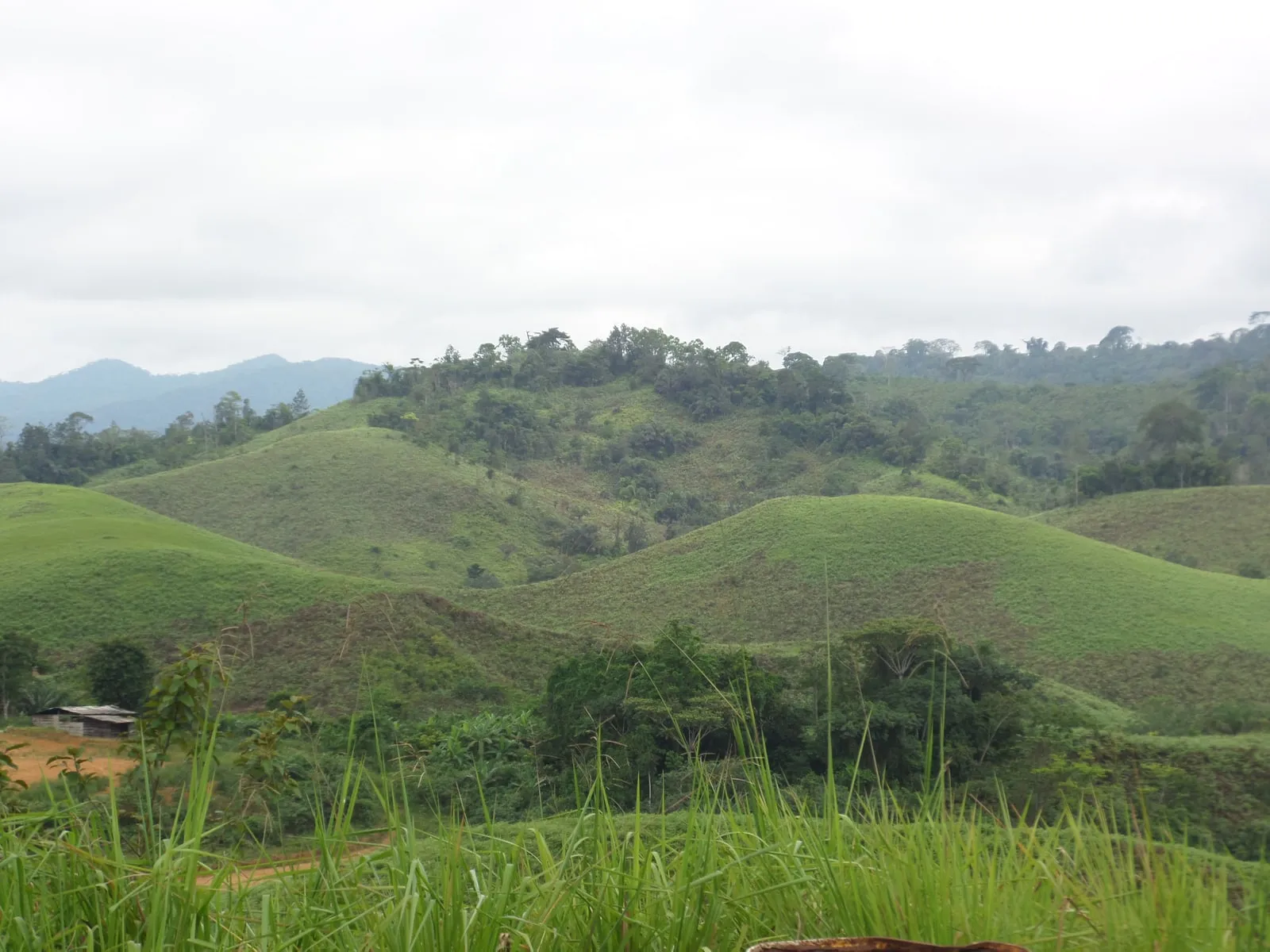
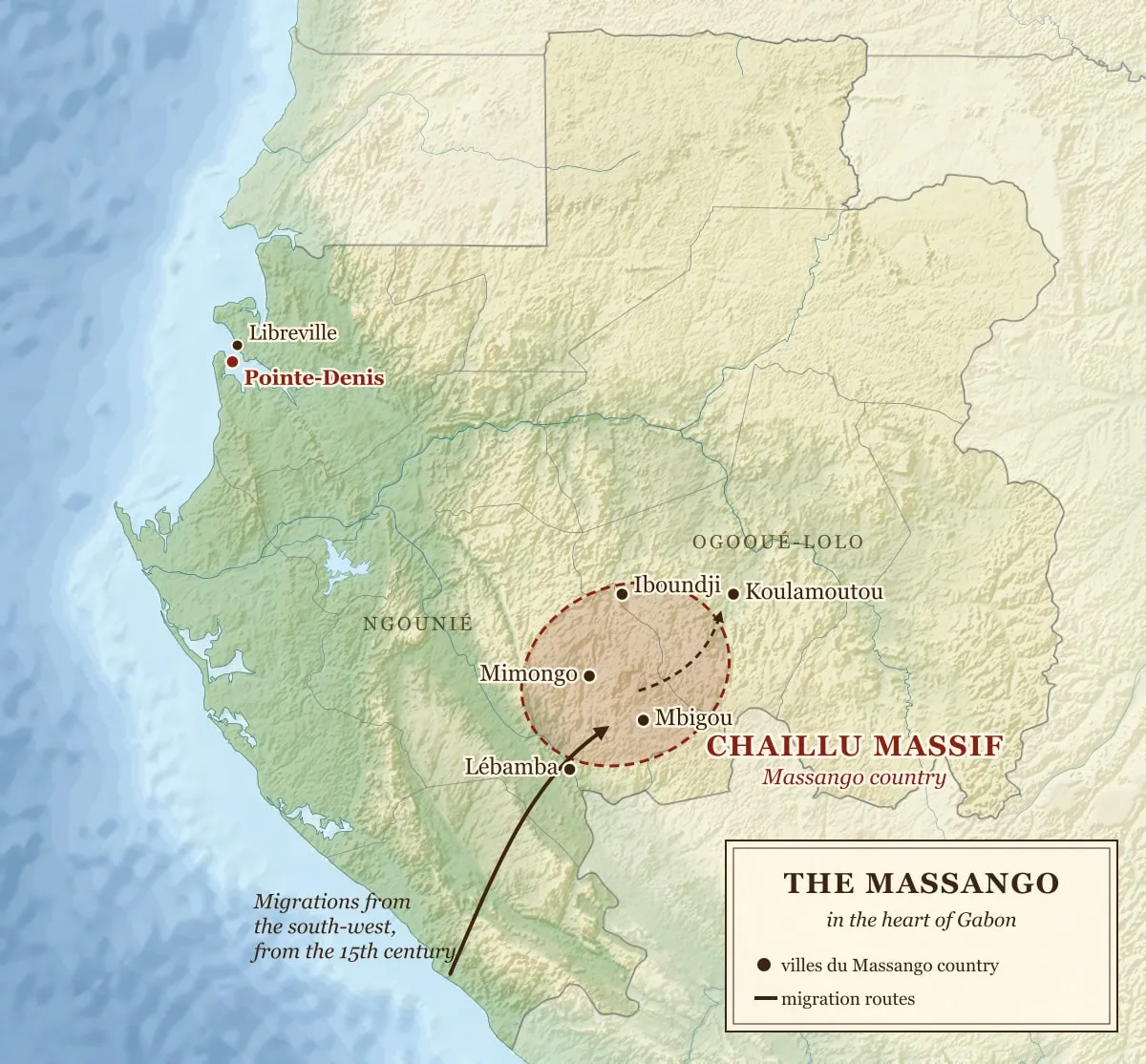
The Massango (also written Masango, and who call themselves Masangu) form a community of some 50,000 to 60,000 people, settled in the mountains of the Chaillu massif, in south-central Gabon. Their villages are spread across two provinces: the Ngounié, around Mimongo, Mbigou and Lébamba, and the Ogooué-Lolo, between Iboundji, Koulamoutou and Popa. It is a country of upland forests and rivers, on the borders of the world of the Mitsogo, their neighbours to the north, with whom they share many traditions.
The Isangu language
The Massango speak Isangu (or Sangu), a Bantu language of the Shira-Punu group, that of the languages of south-western Gabon. The Gabonese linguist Daniel Franck Idiata devoted a reference work to it, Parlons isangu. Langue et culture des Bantu-Masangu du Gabon. The kinship of the languages tells the history: the Massango are closely related to the Shira (Eshira) and the Punu, with whom they form a single family of peoples.
A history from the south-west
According to the Gabonese historian Guy Claver Loubamono-Bessacque, the ancestors of the Shira, Varama, Ngubi, Vungu, Massango and Punu entered Gabon from the south-west from the 15th century onwards, moving up towards the Ngounié. Some of them settled in the mountains, around Mbigou and Mimongo; the others continued towards the Ogooué-Lolo, as far as Iboundji and Koulamoutou. Five centuries later, the geography of the Massango villages still traces the path of that migration.
Rites, initiations and the Mbigou stone
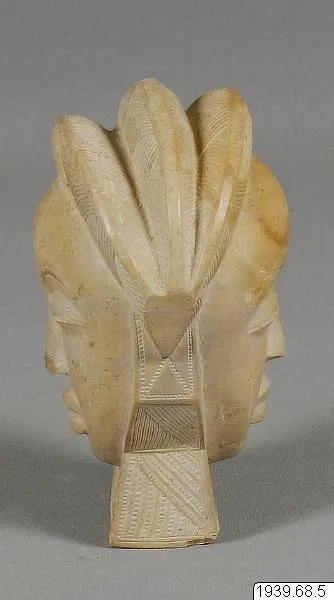
Like their neighbours the Mitsogo and Apindji, cradle of the Bwiti Disumba, the Massango are a people of initiations: societies such as the Mwiri oversee the formation of the young, and the paths of the Bwiti circulate there as throughout southern Gabon. It is within this world that the Djombi Tawo Tawobelongs, the childhood initiation that Jérôme Mouele Niangoureceived among them at the age of 5, the first step of a journey that led him to the Mwiri, to the Bwiti Ngondet and then to the Disumba. Massango country is also that of the Mbigou stone, the grey soapstone that Gabon’s sculptors have made into a national art: the head brought back in 1939 that illustrates this article comes from there.
From the mountains of the Chaillu to the estuary of the Mpongwe, the peoples of Gabon answer one another: the paths of initiation circulate, the lineages cross, and it is this circulation that the tradition of the clan Assiga honours when it welcomes initiates of every branch to the temple at Pointe-Denis.
Sources
- « Massango (peuple) » and « Isangu », Wikipédia entries: Massango · Isangu; drawing in particular on the work of Guy Claver Loubamono-Bessacque.
- Daniel Franck Idiata, Parlons isangu. Langue et culture des Bantu-Masangu du Gabon, Paris, L'Harmattan.
- André Raponda-Walker and Roger Sillans, Rites et croyances des peuples du Gabon, Paris, Présence africaine, 1962: archive.org.
- Carved head from the Mbigou region: Världskulturmuseet, Gothenburg, inv. 1939.68.0005, CC0 image: museum record.
- The Djombi Tawo Tawo and the initiatory journey of Jérôme Mouele Niangou were communicated by him: his portrait on this site.